What Are the Top Solar Battery Storage Systems?
Solar Battery Storage has moved from a niche upgrade to a practical option for households seeking backup power and greater control over solar energy. The International Energy Agency’s 2024 report, Batteries and Secure Energy Transitions, says global energy storage capacity must grow sixfold by 2030, reaching 1,500 gigawatts in its net-zero pathway. That figure covers more than home batteries, but it signals the scale of the shift. IEA Executive Director Fatih Birol described batteries as “the fastest growing clean energy technology today.” The direction is clear. The best system for one home, however, may not suit another.
This guide compares leading systems by usable capacity, continuous output, warranty, efficiency, and compatibility with existing solar equipment. BloombergNEF’s 2024 battery price survey reported an average lithium-ion pack price of $115 per kilowatt-hour, down 20% from 2023. That is a cell-and-pack benchmark, not a quote for a finished home installation. Installed prices also reflect inverters, labor, electrical upgrades, and local conditions. Small details matter. A battery’s stated capacity may not equal the energy available during an outage, and backup loads can change the answer. Rankings can help, but they can also oversimplify. We will look at what each system can actually power, how it connects to solar panels, and where its limitations deserve a closer look.
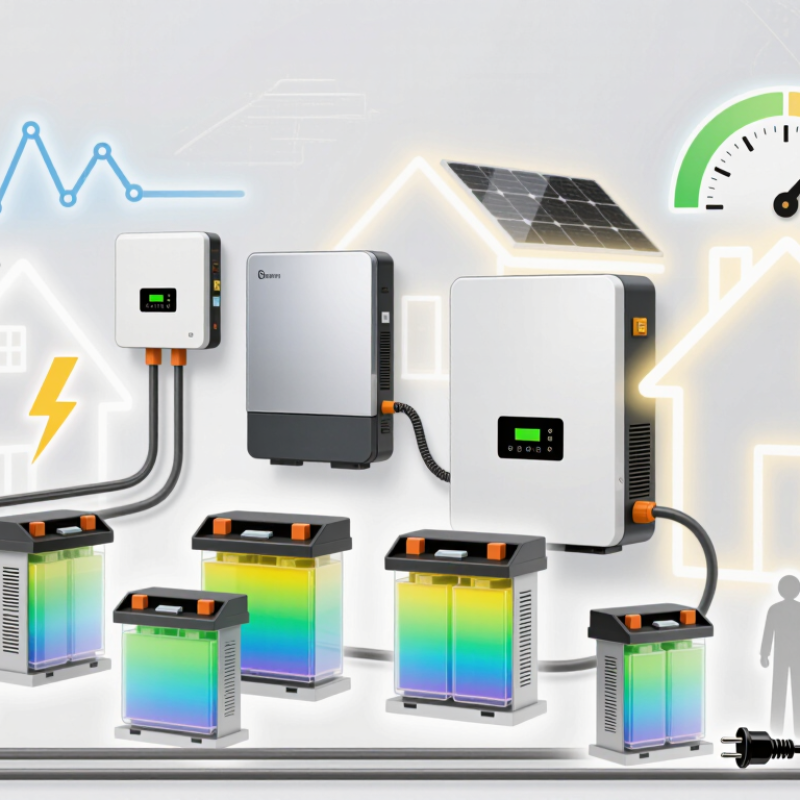
How Solar Battery Storage Systems Work
What Are the Top Solar Battery Storage Systems?
How Solar Battery Storage Systems Work
Solar panels generate direct-current electricity, while most household appliances use alternating current. An inverter converts the power and manages where it goes. During sunny hours, electricity usually serves the home first. Any surplus can charge the battery, subject to its capacity and charge rate. After sunset, stored energy can supply selected circuits or the wider home, depending on system design. During a grid outage, backup power works only if the system includes suitable isolation equipment. That distinction matters.
Batteries do not return every unit of energy they store. NREL’s 2024 Annual Technology Baseline models utility-scale lithium-ion storage at about 85% round-trip efficiency. In practical terms, 10 kilowatt-hours sent into storage may yield roughly 8.5 kilowatt-hours later, before household-specific losses. Real results vary with temperature, power levels, battery age, and inverter settings. IEA’s 2024 Batteries and Secure Energy Transitions report says global battery storage capacity needs to reach 1,200 gigawatts by 2030 in its net-zero pathway. That figure covers grid-scale growth, not just homes, but it shows why storage controls and grid connections matter. A tidy system diagram can hide messy choices: reserve settings, evening demand, and backup priorities all shape what the battery actually does.
Key Features Used to Compare Solar Batteries
A useful comparison starts with usable capacity and continuous power. Capacity, measured in kilowatt-hours, indicates how much energy a battery can store; power, measured in kilowatts, determines which appliances it can run at once. A unit with ample capacity may still struggle to start a pump or several appliances together. Check whether quoted capacity is usable, and compare backup output with your actual loads.
Round-trip efficiency shows how much stored energy you can retrieve. NREL’s 2024 Annual Technology Baseline uses 85% as a modeled efficiency for lithium-ion storage. That is a planning assumption for utility-scale systems, not a guarantee for a home battery. Also compare warranty years, throughput limits, and stated capacity retention. Chemistry, inverter compatibility, temperature range, and installation design affect real-world performance. Specifications can look precise. Homes are messier.
Tips: List essential loads, such as a refrigerator, lights, and internet equipment. Ask for output during both normal operation and a grid outage. Check whether the system can expand later, and request written estimates for usable capacity and efficiency. Don’t compare warranty years alone. A small detail, but an important one.
Leading Solar Battery Storage Systems and Their Strengths
The strongest solar battery storage systems solve different household problems. Modular systems are useful when energy needs may grow, because extra capacity can be added without replacing the entire setup. Look for clear limits on usable capacity and continuous output. Capacity determines how long stored energy lasts; output determines which appliances can run together.
For homes adding storage to existing panels, AC-coupled systems can simplify integration, though conversion losses may reduce efficiency slightly. DC-coupled systems often suit new installations, since solar power can reach the battery with fewer conversion steps. Backup-focused systems offer another strength: they can keep selected circuits running during an outage. A refrigerator, Wi-Fi router, and a few lights may need less power than an entire home. Small details matter. Check whether the system supports your inverter, provides a safe indoor or outdoor installation option, and includes monitoring that shows charge levels clearly. Warranty terms and battery chemistry also deserve careful review. No single design is best for every roof, load pattern, or budget, and published specifications do not reveal every real-world limitation. That uncertainty is worth discussing with a qualified installer before choosing.
What Are the Top Solar Battery Storage Systems?
Typical cycle-life ranges by battery chemistry—a key strength to compare when evaluating solar storage. Actual results vary with product design, operating temperature, and depth of discharge.
Lithium iron phosphate (LFP) batteries generally offer longer cycle life; nickel manganese cobalt (NMC) batteries balance cycle life with high energy density; lead-acid batteries typically have a shorter cycle life. Ranges are indicative industry figures, not guarantees for individual systems.
How to Choose a System for Your Energy Needs
Choosing a solar battery system starts with your actual energy use, not the largest capacity on a product sheet. Review several months of electricity bills and note when your household uses the most power. Evening cooking, heating, and electric vehicle charging can create very different needs. A battery’s usable capacity indicates how much energy it can deliver; its power rating shows how many appliances it can run at once. Both figures matter.
Decide what you want the system to do. Backup during outages usually calls for a different setup than shifting daytime solar energy into the evening. Check whether the system can support essential circuits, and ask how long it can operate them under realistic conditions. Also compare round-trip efficiency, expected cycle life, warranty terms, and compatibility with your existing inverter. Installation details matter: available wall space, ventilation, and electrical upgrades can affect the final cost. Estimates are still estimates; real performance changes with weather and usage.
Tips: List essential appliances and their wattages. Ask for a written estimate based on your usage, not a generic household. Leave room for uncertainty.
Installation, Safety, and Battery Maintenance
A solar battery system performs best when its location and wiring are planned carefully.
Before installation, check the manufacturer’s spacing, temperature, and ventilation requirements. An appropriately qualified installer should assess the electrical supply, mounting surface, and cable route. Keep the unit away from direct heat, standing water, and areas where it could be struck.
Small details matter.
Clearances can be easy to overlook when a garage wall seems convenient, so confirm them before fixing the battery in place. Ask for a clear explanation of the shutdown controls and what to do if the system displays a fault.
Safety continues after installation. Follow the system manual, and do not remove covers or handle electrical connections yourself.
Heat changes everything.
Check the display periodically for unusual warnings, and look for visible damage, moisture, or blocked airflow around the unit. Different battery designs need different care; some are sealed and require little routine attention. Avoid assuming that all systems have the same maintenance schedule. Record installation details and service visits, and arrange professional help if performance changes suddenly. It is tempting to ignore a small warning when the lights still work, but that is not a reliable way to judge battery health.