Solar Panel Removal and Reinstall for Roof Replacement in Florida
If you’re replacing your roof and already have solar panels installed, you’ll likely need solar panel removal and reinstall during the process. When planned correctly,

Choosing the best Residential Solar Power system in 2026 requires more than comparing panel prices. A strong system must match the home, climate, budget, and daily electricity habits. Roof direction matters. So does shade from a nearby tree at 3 p.m.
Dr. Fatih Birol, Executive Director of the International Energy Agency, described solar power as “the new king of electricity markets” when discussing new global generating capacity. That view explains the market’s momentum, but it does not identify one perfect system for every household. A reliable choice may combine high-efficiency panels, a properly sized inverter, durable mounting equipment, and optional battery storage. Battery value depends on local electricity rates, outage risks, and available incentives. Bigger is not always better.
This guide will examine system performance, warranties, installation quality, monitoring tools, and long-term ownership costs. It will also consider real-world details, such as winter production, battery temperature, roof repairs, and replacement timelines. Some recommendations may feel less impressive than advertised. That is useful. A system producing slightly less electricity may still offer better value if it has clearer warranties and dependable local service. Even experienced homeowners can misjudge future energy use. Electric vehicles, heat pumps, and growing families can change the calculation quickly. The best Residential Solar Power system is therefore not simply the most powerful package. It is the one designed honestly for the home it serves.
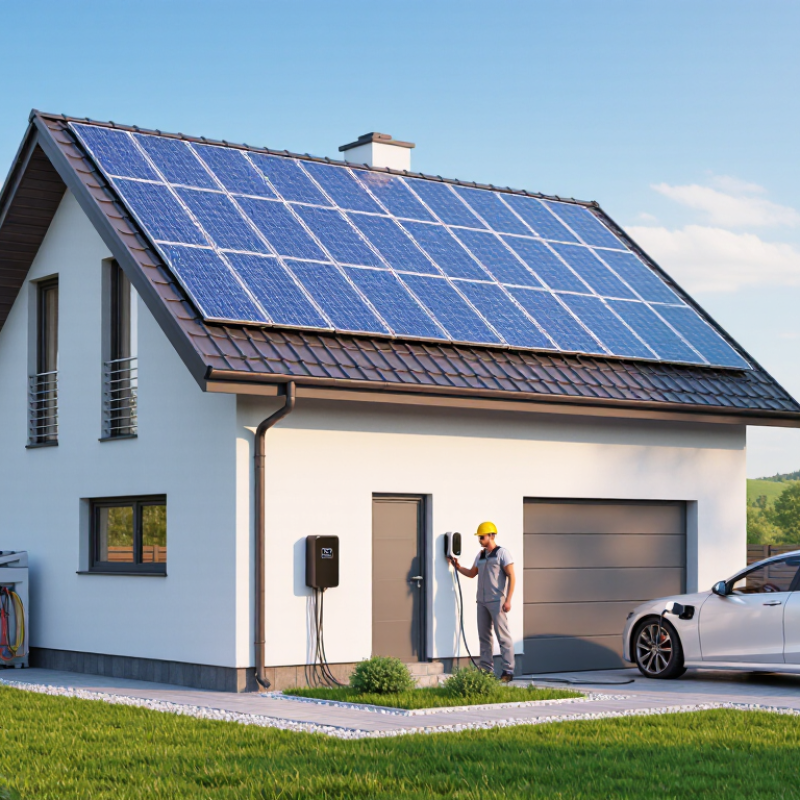
A residential solar power system now includes more than rooftop panels. Most homes use panels, an inverter, wiring, monitoring software, and sometimes a battery. The right design depends on roof direction, local sunlight, household demand, and utility rules. A shaded roof may produce less energy than expected. Small details matter.
Hybrid systems are increasingly practical for households facing outages or time-based electricity prices. During daylight, solar energy can power appliances and charge the battery. At night, stored electricity can reduce grid consumption. However, batteries add cost, weight, and replacement planning. They are not automatically the best choice.
Start with a recent electricity bill and a professional load assessment. Measure large loads, such as heat pumps, water heaters, and electric vehicle chargers. Ask how the system performs during cloudy weeks, not only on sunny days. A qualified installer should explain equipment ratings, fire-safety requirements, maintenance, warranties, and expected degradation. Local permits and grid-interconnection rules also affect the final design.
My practical concern is oversizing. More panels can look impressive, yet unused production may weaken the financial case. Battery savings can also be overstated without realistic evening usage data. I would compare several production estimates and request assumptions in writing. Solar decisions are technical, but they should still fit how the household actually lives.

What Is the Best Residential Solar Power System in 2026?
Modern home solar systems combine high-efficiency modules, smart inverters, battery storage, and digital energy controls. N-type cell designs, including TOPCon and heterojunction structures, can reduce efficiency losses in hot conditions. Fraunhofer’s 2024 Photovoltaics Report recorded commercial module efficiencies above 23%, although rooftop results are usually lower.
The inverter matters as much as the panel. Hybrid inverters manage solar production, household loads, and battery charging through maximum power point tracking. Microinverters can improve output when chimneys or trees create partial shade. They also provide panel-level monitoring. Useful, but not magic. More electronics can mean more possible failure points.
Battery chemistry is changing quickly. Lithium iron phosphate systems offer strong thermal stability and long cycle life. The International Energy Agency reported that battery storage costs fell sharply during the past decade, supporting wider residential adoption. Yet battery sizing should follow evening demand, not marketing claims. A typical home may need seven to ten kilowatt-hours for basic backup, while electric heating requires far more. The U.S. Department of Energy recommends evaluating efficiency, resilience, and total system cost together. Lawrence Berkeley National Laboratory’s 2024 Tracking the Sun report placed new U.S. residential systems near 7 kilowatts, but local roof space and electricity use vary considerably. Wind, shade, and seasonal demand still complicate predictions.
What Is the Best Residential Solar Power System in 2026?
How to Compare Solar Panel, Inverter, and Battery Options
The best residential solar system depends on your roof, electricity use, and local weather. Do not judge panels by efficiency alone. Check their output in heat, shade, and low winter light. A slightly less efficient panel may produce more useful power on a difficult roof. Measure the roof area carefully. One overlooked vent can change the entire design.
The inverter deserves equal attention. It converts panel electricity into household power and controls system performance. Compare its continuous output, peak capacity, monitoring tools, and replacement access. A system with oversized panels and a weak inverter can waste production during bright afternoons. Ask whether the inverter supports future expansion. I have seen homeowners focus on panel warranties while ignoring this practical limit.
Battery choices require honest calculations. Compare usable capacity, round-trip efficiency, operating temperature, backup power, and expected cycle life. A large battery is not automatically better. If evening usage is low, unused capacity becomes an expensive shelf. For backup, identify essential circuits, such as refrigeration, lighting, and medical equipment. Test the proposed load during an outage scenario. My early estimates often looked too optimistic because they ignored cloudy days and seasonal demand. That mistake is worth avoiding. Request production estimates based on local weather records, not ideal laboratory conditions. A qualified installer should explain assumptions clearly and provide maintenance details in writing.
| Component | Option 1: Value-Oriented | Option 2: Balanced Performance | Option 3: Premium Flexibility | Best Fit |
|---|---|---|---|---|
| Solar panel technology | Monocrystalline silicon, standard full-cell design | Monocrystalline silicon with half-cut cells and improved temperature performance | High-efficiency monocrystalline or back-contact design | Most homes: Option 2 |
| Typical panel power | 350–420 W per panel | 400–470 W per panel | 430–500 W per panel | Option 3 can reduce panel count when roof space is limited |
| Typical module efficiency | 19%–21% | 20%–23% | 22%–24%+ | Higher efficiency is useful on small or shaded roofs |
| Panel degradation | Approximately 0.45%–0.55% per year | Approximately 0.35%–0.45% per year | Approximately 0.25%–0.40% per year | Lower degradation supports higher long-term energy output |
| Product and performance coverage | Typically 10–15 years product coverage and 25–30 years performance coverage | Typically 15–20 years product coverage and 25–30 years performance coverage | Typically 20–25 years product coverage and up to 30 years performance coverage | Review exclusions, labor coverage, and transfer terms |
| String inverter | Lower initial cost; best for simple, unshaded roofs | Higher efficiency with two or more maximum power point tracking inputs | Hybrid-ready model with advanced monitoring and backup controls | Simple roofs and lowest upfront cost |
| Microinverter system | Higher equipment cost than a basic string system | Panel-level optimization and monitoring; performs well with partial shading | Advanced panel-level control with flexible battery integration | Roofs with multiple orientations, dormers, or partial shade |
| Hybrid inverter | Battery-ready capability may require additional equipment | Combines solar generation, battery charging, and backup management | Supports sophisticated energy management, multiple battery units, and load control | Best for future battery expansion |
| Typical inverter efficiency | Approximately 96%–98% | Approximately 97%–99% | Approximately 97%–99% depending on operating conditions | Compare weighted efficiency, not only peak efficiency |
| Inverter service life | Approximately 10–15 years | Approximately 12–20 years | Approximately 15–25 years with appropriate maintenance | Budget for possible inverter replacement during panel life |
| Battery chemistry | Lithium iron phosphate (LFP) | LFP with integrated battery management and thermal monitoring | Modular LFP system with independent expansion and advanced controls | LFP is the common residential choice |
| Usable battery capacity | 5–10 kWh | 10–20 kWh | 20–40+ kWh using multiple modules | Size according to evening loads and backup priorities |
| Usable depth of discharge | Usually 90%–95% | Usually 90%–95% | Usually 90%–100%, subject to the system warranty | Use the warranted usable capacity for calculations |
| Round-trip battery efficiency | Approximately 85%–92% | Approximately 88%–95% | Approximately 90%–97%, depending on system configuration | Higher efficiency reduces charging and discharging losses |
| Battery power output | Approximately 2–5 kW continuous output | Approximately 5–10 kW continuous output | Approximately 10–20+ kW with multiple modules | High-power loads may require more than one battery unit |
| Backup capability | Usually selected essential circuits only | Essential circuits plus selected high-priority household loads | Whole-home backup may be possible with load management and adequate capacity | Check starting power for pumps, compressors, and motors |
| Typical residential system size | 4–6 kW solar array with 5–10 kWh battery | 6–10 kW solar array with 10–20 kWh battery | 10–15+ kW solar array with 20–40+ kWh battery | Final size depends on annual consumption, roof area, and local rules |
| Indicative annual solar production | Approximately 4,800–9,600 kWh per year | Approximately 7,200–16,000 kWh per year | Approximately 12,000–24,000+ kWh per year | Actual output varies with location, orientation, shading, and weather |
| Monitoring and energy management | Basic system-level production monitoring | Solar, battery, consumption, and import/export monitoring | Real-time load control, time-of-use optimization, and flexible backup settings | Useful where electricity prices vary by time of day |
| Relative installed cost | Low to moderate | Moderate | High | Battery size, electrical upgrades, and labor strongly affect total cost |
| Recommended priority | Maximize immediate payback with a simple roof layout | Balance energy yield, backup, cost, and future expansion | Maximize resilience, usable roof output, and energy independence | Balanced systems suit most homeowners |
Note: Figures are typical residential planning ranges rather than guaranteed specifications. Actual performance and economics depend on local solar conditions, electricity rates, roof orientation, shading, permitting requirements, installation quality, and the terms of each product warranty.
What Is the Best Residential Solar Power System in 2026?
The best system depends on your home, electricity use, roof, and budget. A household using air conditioning at noon needs a different design from one using power mainly after sunset. Review twelve months of utility bills before comparing equipment. Monthly averages can hide costly summer peaks.
Roof direction and shade matter greatly. A chimney shadow may reduce output across several panels. An on-site assessment should measure roof angles, structural condition, and nearby trees. Do not ignore future changes, either. An electric vehicle or heat pump can quickly change your energy profile. Not every roof needs a battery.
Battery storage becomes more valuable when evening demand is high or outages are common. However, storage adds cost, weight, maintenance needs, and replacement questions. Ask how much usable capacity remains after several years, not only the advertised capacity. Poorly matched batteries can sit underused. That is a common design mistake.
Qualified professionals should calculate annual production using local weather data and realistic shade assumptions. Request clear details about warranties, monitoring, labor coverage, and expected degradation. Verify permits, electrical requirements, and roof-load limits with the appropriate local authorities. Experience matters here. The cheapest proposal may omit panel-level controls, safe shutdown equipment, or future service costs. A reliable design leaves room for inspection and repair. In practice, the “best” system is often less powerful than expected, but better matched to the home.
The best residential solar system in 2026 is not simply the largest one. It should match household demand, roof structure, local weather, and electricity tariffs. A professional installer should review twelve months of utility bills, roof shading, wiring, and fire-access requirements before quoting. The National Renewable Energy Laboratory’s PVWatts tool can estimate annual production, but real output still changes with dust, snow, heat, and shading. Small details matter.
Installation costs remain location-dependent. Lawrence Berkeley National Laboratory’s Tracking the Sun 2024 report placed median residential photovoltaic prices near $3.2 per watt in 2023, before incentives. A 7-kilowatt system could therefore approach $22,400 before local adjustments. Battery storage adds substantial cost, although it may improve backup value and time-of-use savings. The U.S. Energy Information Administration reports that residential electricity prices continued rising in many regions, making accurate tariff assumptions essential. Payback estimates can be wrong.
Maintenance is usually light, not absent. Owners should inspect monitoring data monthly and arrange professional electrical checks after severe storms. Panels may need cleaning where agricultural dust or heavy pollen accumulates. A long-term model should include inverter replacement, battery capacity loss, insurance, and roof repairs. NREL research commonly uses an annual module degradation assumption near 0.5%; after twenty years, output may be roughly 90% of its starting level. Actual results vary. A shaded roof can underperform dramatically. A careful installer should show measured shade losses, production assumptions, equipment warranties, and service response times in writing.

If you’re replacing your roof and already have solar panels installed, you’ll likely need solar panel removal and reinstall during the process. When planned correctly,
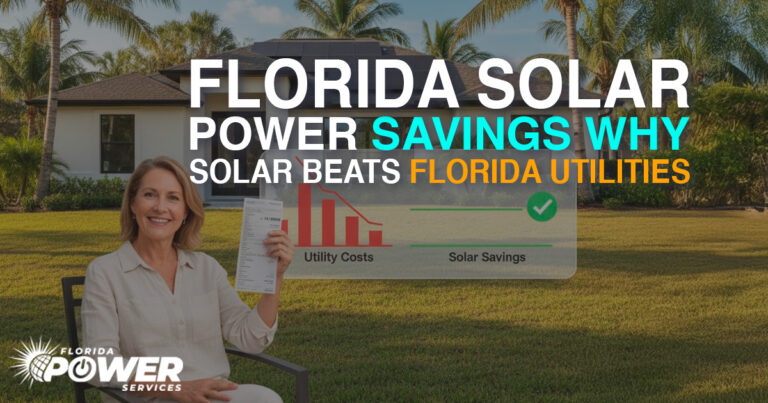
Florida homeowners are seeing their power bills rise faster than ever. Between AI data centers, fuel costs, and storm-related grid upgrades, utilities are increasing rates

⏳Go Solar Before the Deadline Permitting in Pinellas County solar jurisdictions is already experiencing serious delays. Plan reviews are running 4+ weeks behind. That means

NABCEP Certified
PV Installer

Licensed &
Insured

Systems Engineered
For A 25 Year Life Cycle

Over 4 Megawatts
Of Solar Installed

Expert Service In The
Unlikely Event Of
An Issue
Florida Power Services
"The Solar Power Company"
Florida Power Services
"The Solar Power Company"
based on 62 reviews
Florida Power Services
"The Solar Power Company"
based on 33 reviews


Utility rates rise 4–6% every year. Solar converts that rising expense into an asset that can pay for itself, and once it’s paid off, your power is essentially free. Many property owners qualify with no money out of pocket.