
Solar Panel Removal and Reinstall for Roof Replacement in Florida
If you’re replacing your roof and already have solar panels installed, you’ll likely need solar panel removal and reinstall during the process. When planned correctly,

Choosing a solar system is no longer just a question of panel count. In 2023, global solar capacity grew by approximately 346 gigawatts, according to IRENA’s Renewable Capacity Statistics 2024. Meanwhile, the International Energy Agency reported that battery storage deployment in the power sector added about 42 gigawatts that year. These figures show why generation and storage increasingly belong in the same conversation. They do not, however, mean every home needs the same setup.
Hybrid Solar Systems can combine rooftop panels, batteries, grid power, and sometimes a backup generator. The right configuration depends on practical details: evening electricity use, local outage patterns, roof orientation, battery capacity, and the equipment’s ability to work together. Small choices matter. A battery that looks adequate on paper may not run a well pump, refrigerator, and essential lights through a long outage. Yet buying more storage than your household can use can also add cost without clear value.
This guide presents 10 tips for comparing systems, from sizing and inverter compatibility to warranties, installation quality, and future expansion. It draws on industry reports for broader context, while recognizing that those reports cannot replace a site-specific assessment. There is a less tidy part, too: household consumption changes, and estimates can miss real-life habits. Keep that uncertainty in view. A careful comparison should explain its assumptions, show expected performance, and leave room for questions before you commit.
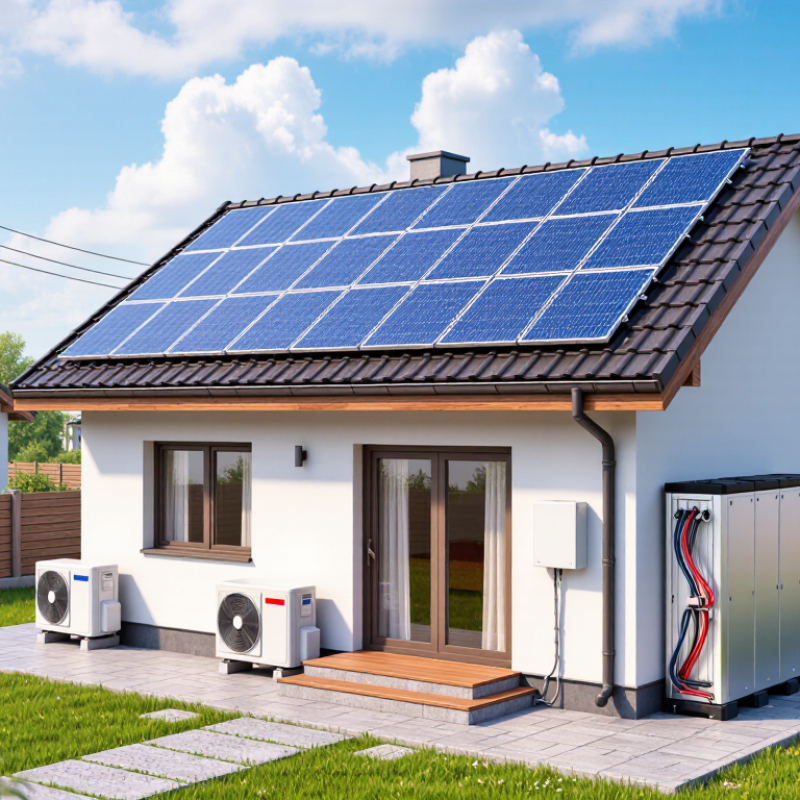
A hybrid system should match your household’s actual loads, not just the solar array’s output. The U.S. Energy Information Administration reported average residential electricity use of about 10,791 kWh per customer in 2022. That figure is a benchmark, not a sizing target: heating, cooling, and appliance use vary widely. Review twelve months of bills, then note which devices run together during the evening peak. A first-pass list can be wrong. Check it against real routines.
Tips: Record each essential device’s watts and expected backup hours. Separate daily loads from rare emergencies. Include startup surges from refrigerators and pumps. Leave room for uncertainty.
Choose backup circuits deliberately. A refrigerator, a few lights, internet equipment, and selected medical devices may matter more than powering every room. Add their running watts to estimate sustained demand, then check each motor’s starting requirement against the inverter’s surge rating. Battery capacity determines how long those loads can run; inverter capacity determines what can operate simultaneously. The National Renewable Energy Laboratory’s PVWatts tool estimates solar production, but it does not replace a household load assessment. Test assumptions with an electrician and confirm the equipment’s stated limits. A little margin helps. Too much backup capacity can raise costs without solving the real peak-load problem.
| Tip | What to Assess | Illustrative Data or Check | Planning Action |
|---|---|---|---|
| 1. Review electricity use | Daily and seasonal household energy consumption. | A home using 20 kWh per day consumes about 600 kWh in a 30-day month. | Use at least 12 months of utility bills where available; note seasonal heating and cooling changes. |
| 2. Identify peak demand | The highest power the home may draw at one time, measured in kW. | A 5 kW running load can exceed 7 kW briefly if motors or compressors start together. | Check interval-meter data or have an electrician measure likely simultaneous loads and starting surges. |
| 3. List essential backup circuits | Which circuits must remain powered during an outage. | Common priorities include a refrigerator, selected lights, internet equipment, and a medical device. | Create a dedicated essential-loads list and confirm circuit separation with a qualified electrician. |
| 4. Estimate backup energy needs | How much energy essential loads use over the desired outage period. | A 0.5 kW average essential load running for 10 hours uses about 5 kWh, before system losses. | Allow for conversion losses and avoid assuming that a battery's rated capacity is fully usable. |
| 5. Match inverter output to loads | Continuous output, short-duration surge capability, and supported supply configuration. | The inverter must support both the expected simultaneous load and applicable motor-starting surges. | Compare the inverter's continuous and surge ratings with the load assessment; verify phase and voltage compatibility. |
| 6. Size battery capacity for the backup goal | Usable battery energy, discharge limits, and required outage duration. | A 10 kWh nominal battery may provide less than 10 kWh of usable energy, depending on its settings and system design. | Check usable capacity, reserve settings, temperature limits, and whether capacity can be expanded later. |
| 7. Evaluate solar production | Roof orientation, shading, available area, and local seasonal sunlight. | A 1 kW solar array's daily output varies substantially with location, season, weather, and shading. | Use a site-specific production estimate rather than a single year-round output assumption. |
| 8. Check solar recharge during outages | Whether the system can power loads and recharge the battery while the grid is unavailable. | Actual recharge depends on available sunlight, solar input limits, battery state, and loads operating at the time. | Confirm that backup operation supports solar charging and review the system's operating modes with the installer. |
| 9. Verify transfer and backup behavior | How the system responds to an outage and which circuits receive backup power. | Some configurations back up only designated circuits, not every circuit in the home. | Ask about transfer operation, backup limits, restart behavior, and any loads that must be excluded. |
| 10. Allow for future needs and safe installation | Potential additions such as an electric vehicle, heat pump, or increased household occupancy. | New high-power equipment can raise both daily energy use and simultaneous peak demand. | Discuss expansion options, permits, electrical protection, and applicable local codes with a licensed professional. |
Note: Figures are illustrative planning examples, not a system design. Actual requirements depend on measured loads, equipment specifications, local conditions, and applicable electrical codes.



If you’re replacing your roof and already have solar panels installed, you’ll likely need solar panel removal and reinstall during the process. When planned correctly,
Florida homeowners are seeing their power bills rise faster than ever. Between AI data centers, fuel costs, and storm-related grid upgrades, utilities are increasing rates

⏳Go Solar Before the Deadline Permitting in Pinellas County solar jurisdictions is already experiencing serious delays. Plan reviews are running 4+ weeks behind. That means