Top 10 Battery Backup Systems for Reliable Power Supply?
In an increasingly unpredictable world, reliable power supply is essential. Battery Backup Systems offer a robust solution during outages. These systems ensure that your appliances and devices stay operational when the grid fails.
Selecting the right battery backup can be daunting. With many options available, each with unique features, it’s crucial to find one that fits your needs. Factors like capacity, runtime, and inverter type can greatly influence your choice. A high-quality system can effectively protect your home or business.
However, not all systems perform equally. Some may underdeliver in critical situations, leading to frustration. Researching user reviews and expert recommendations can help identify the best battery backup systems. Making an informed decision ensures that you can rely on these systems when it matters most.
Overview of Battery Backup Systems and Their Importance
Battery backup systems play a crucial role in maintaining reliable power supply during outages. They offer peace of mind, ensuring that essential devices remain functional. These systems are particularly important for homes and businesses that rely on uninterrupted power for daily operations. In times of emergencies, they provide the energy needed to keep critical appliances running.
Choosing the right battery backup system can be challenging. It’s essential to consider your specific needs and power requirements. Start by calculating the wattage of your devices to ensure the system can handle the load. Look for options that offer a balance between capacity and duration. Each environment is unique, so explore different configurations that can cater to your demands.
**Tip:** Regularly test your backup system. This ensures it works efficiently when needed.
Monitoring the health of your batteries is equally important. Check for signs of wear or degradation. Batteries need maintenance to maximize their lifespan.
**Tip:** Keep a log of performance to track any changes over time.
Investing in a reliable battery backup system not only protects your devices but also provides the security of knowing you're prepared for unexpected power interruptions. Prioritize options that suit your needs while being aware that no system is flawless and may require ongoing adjustments.
Top 10 Battery Backup Systems for Reliable Power Supply
This chart illustrates key specifications for battery backup systems, including their capacity, charge time, output power, number of ports, and warranty period. These factors are essential for determining the reliability and performance of battery backup solutions.
Key Features to Consider When Choosing a Battery Backup System
When choosing a battery backup system, several key features should be taken into account. First, battery capacity is crucial. It determines how long your devices can run during an outage. A higher capacity means longer backup time but may come at a higher price. Consider how many devices you want to power. This will help determine the necessary capacity for your needs.
Efficiency is another important aspect. A system with high efficiency will convert more stored energy into usable power. Pay attention to the inverter specs. An inverter plays a key role in how well the backup system functions. It converts DC power from the batteries to AC power for your devices. Different systems have varying inverter ratings, directly impacting their performance.
Additionally, look at the recharge time. Systems that recharge quickly can be more reliable during prolonged outages. Some users may find the interface challenging. A user-friendly design is essential for ease of operation. It’s also valuable to consider the warranty and support that come with the system. Reliable customer service can mitigate issues that may arise later. Balancing these features can lead to a more satisfactory purchase experience.
Top 10 Battery Backup Systems for Reliable Power Supply
| Battery Type |
Capacity (Wh) |
Output Power (W) |
Runtime (Hours) |
Features |
| Lithium-Ion |
3000 |
1500 |
4 |
Fast Charging, Lightweight |
| Lead-Acid |
2500 |
1000 |
3 |
Cost-Effective, Reliable |
| AGM |
2000 |
1200 |
5 |
Maintenance-Free, Deep Cycle |
| Gel |
1500 |
800 |
4 |
Deep Discharge, Vibration Resistant |
| Nickel-Cadmium |
1800 |
1000 |
6 |
Durable, Wide Temperature Range |
| Flow Battery |
4000 |
2000 |
8 |
Scalable, Long Cycle Life |
| Solid-State |
3500 |
1800 |
5 |
High Energy Density, Safe |
| Nickel-Metal Hydride |
2200 |
900 |
4 |
High Capacity, Environmentally Friendly |
| Lithium Iron Phosphate |
3200 |
1300 |
5 |
Safety, Long Lifespan |
| Hybrid Battery |
3600 |
1600 |
4 |
Combination of Technologies, Versatile |
Top 10 Battery Backup Systems: Performance and Reliability Comparison
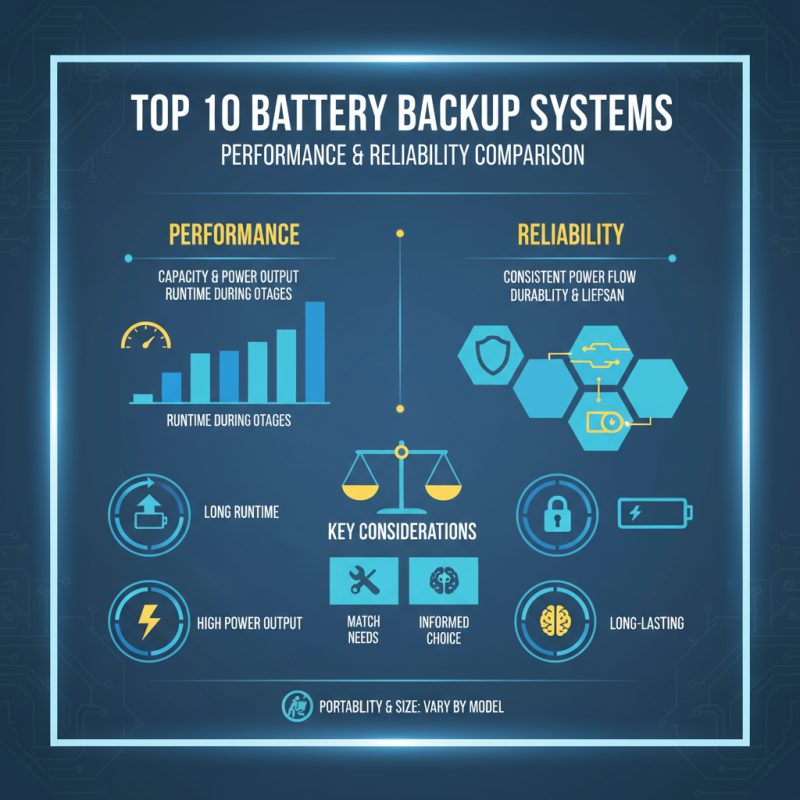
When considering battery backup systems, performance and reliability are crucial. Different models offer various capacities and power outputs. Understanding their specifications can help in making an informed choice. Some systems excel in providing long runtime during outages. However, they may lack portability or be bulky. It's essential to match the system's capabilities to your needs.
Reliability is often seen through user experiences and reviews. Many users report frustrations with certain models that underperform during extended outages. Others highlight the importance of a model’s charging time. Some systems take longer to recharge, which can leave users vulnerable. Testing different systems under real conditions can reveal their true performance.
Investing time in research pays off. Reading expert reviews can provide insight into the best options available. Don't overlook less popular brands that may offer superior quality. It's important to also be aware of the potential hidden costs, such as battery replacements. Using a reliable battery backup system is vital, yet no system is perfect. Always assess your unique requirements before making a commitment.
Installation and Maintenance Tips for Battery Backup Systems
When it comes to battery backup systems, installation requires careful planning. Ensure you select a suitable location. The area should be dry and well-ventilated. Avoid placing the unit near flammable materials. Proper placement enhances airflow and extends battery life.
Maintenance is just as crucial as installation. Check connections regularly to prevent corrosion. Clean terminals to ensure efficient power flow. It’s also important to test the system monthly. This simple check can identify issues early. A neglected system may fail when you need it the most.
Understanding your backup system is essential. Read the user manual thoroughly. Familiarize yourself with the operational procedures. If you’re unsure, consider consulting a professional. They can often spot potential issues that might go unnoticed. Regular inspections will enhance reliability and longevity, ensuring you have power when needed.
Understanding the Cost and Value of Battery Backup Solutions
Battery backup systems are essential for maintaining power during outages. The cost and value of these systems vary significantly based on capacity and features. According to industry data, the average price of a residential battery backup system ranges from $5,000 to $15,000. These costs can deter many homeowners despite the growing need for reliable energy solutions.
Investing in battery backup can yield significant long-term savings. Research indicates that systems with higher capacity can pay for themselves in about seven years through reduced utility bills. However, initial costs remain a barrier. The price may not reflect the reliability of power during critical times. It is essential to weigh potential savings against the initial expense.
The choice of a battery backup system also impacts its value. Different technologies, like lithium-ion or lead-acid, exhibit varying efficiencies and lifespans. While lithium-ion batteries last longer and have higher efficiency, they often come at a higher price. On the other hand, lead-acid batteries are cheaper but may need more frequent replacements. Consumers must consider these factors carefully, as the right choice benefits not just during outages but impacts overall energy savings.