
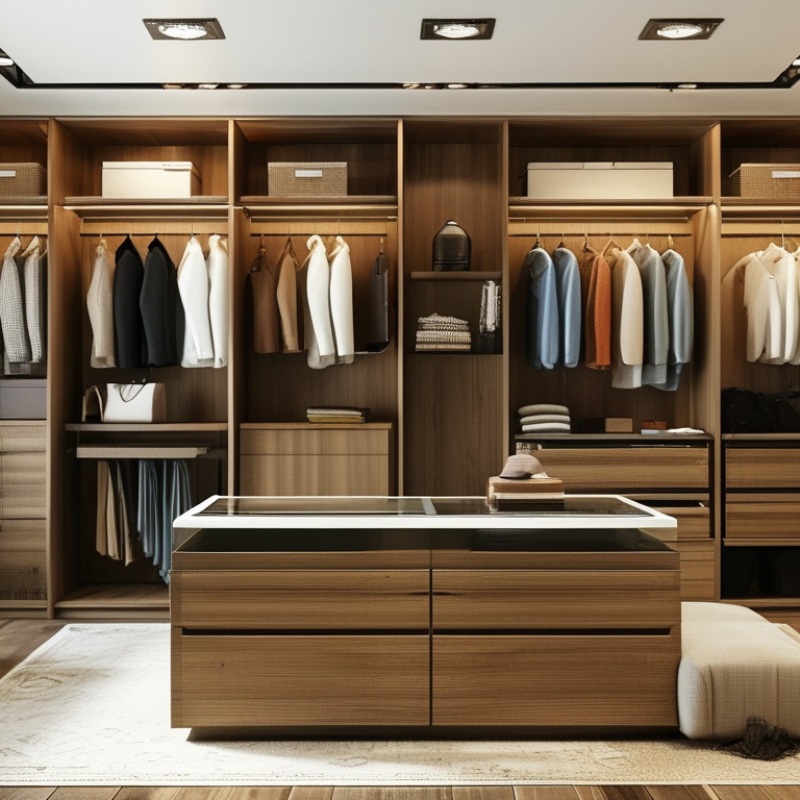
A modern walk-in wardrobe should feel calm, but accessibility must shape its geometry. WHO’s 2022 report estimates that 1.3 billion people experience significant disability. That equals 16% of the world’s population. I keep a continuous, slip-resistant route and place daily clothing between knee and shoulder height. Sliding doors reduce conflicts in narrow aisles. A firm seat, contrasting handles, and even lighting support people with limited balance or vision. These details serve everyone.
Material choices need evidence, not green adjectives. UNEP’s 2022 Global Status Report links buildings to 34% of global energy demand. It also attributes about 37% of energy- and process-related carbon dioxide emissions to the sector. A smaller wardrobe still carries impacts through boards, finishes, lighting, and replacement cycles. I specify durable panels, repairable runners, verified recycled content, and low-emitting finishes. I would not claim every “natural” coating is safer. The U.S. CPSC’s 2023 report recorded 234 furniture tip-over deaths from 2013 through 2022. Tall units need secure anchoring and professional installation.
Future flexibility means designing for changed bodies, habits, and technology. AARP’s 2024 survey found that 75% of adults aged 50 and older want to remain in their current homes. Use adjustable shelves, spare fixing points, accessible power, and removable drawers. Leave service space for lighting upgrades. It is not perfect. I often plan for today’s shoe collection. Better practice is reserving empty capacity for a walking aid, a new owner, or fewer clothes. That is less glamorous, but more honest.