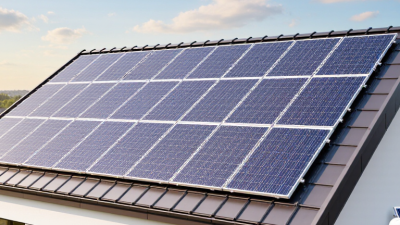
Solar Panel Removal and Reinstall for Roof Replacement in Florida
If you’re replacing your roof and already have solar panels installed, you’ll likely need solar panel removal and reinstall during the process. When planned correctly,

Choosing the right Solar Energy Solutions begins with understanding your property, not copying a neighbor’s system. Roof direction, seasonal shade, local weather, and electricity usage all shape the final result. A home beneath tall pine trees may need fewer panels, battery storage, or a ground-mounted design. A sunny roof still deserves a careful inspection.
Dr. Fatih Birol, Executive Director of the International Energy Agency, describes energy efficiency as “the first fuel of the energy transition.” That principle matters here. A smaller, efficient home system can outperform an oversized installation with poor insulation or wasteful appliances. Review annual electricity bills, peak evening demand, available roof space, and future changes such as an electric vehicle. Do not judge solutions by panel count alone.
Look beyond the sales brochure. Compare panel efficiency, inverter warranties, battery cycle life, monitoring tools, installer certifications, and realistic maintenance costs. Ask how the system performs during cloudy weeks. Ask who handles repairs after installation. These details reveal expertise and accountability.
Numbers can mislead.
Production estimates should include shading assumptions and seasonal variation. Payback periods also depend on tariffs, financing, export rules, and battery replacement costs. Those factors can change. I have seen homeowners focus too heavily on maximum output while overlooking installation quality and emergency access. That is an imperfect approach, but it is common.
The strongest Solar Energy Solutions balance performance, resilience, safety, and affordability. Choose evidence over pressure. Request an itemized proposal, verify independent reviews, and obtain several site-specific assessments before signing. A dependable system should fit your daily life, not merely look impressive on a quotation.
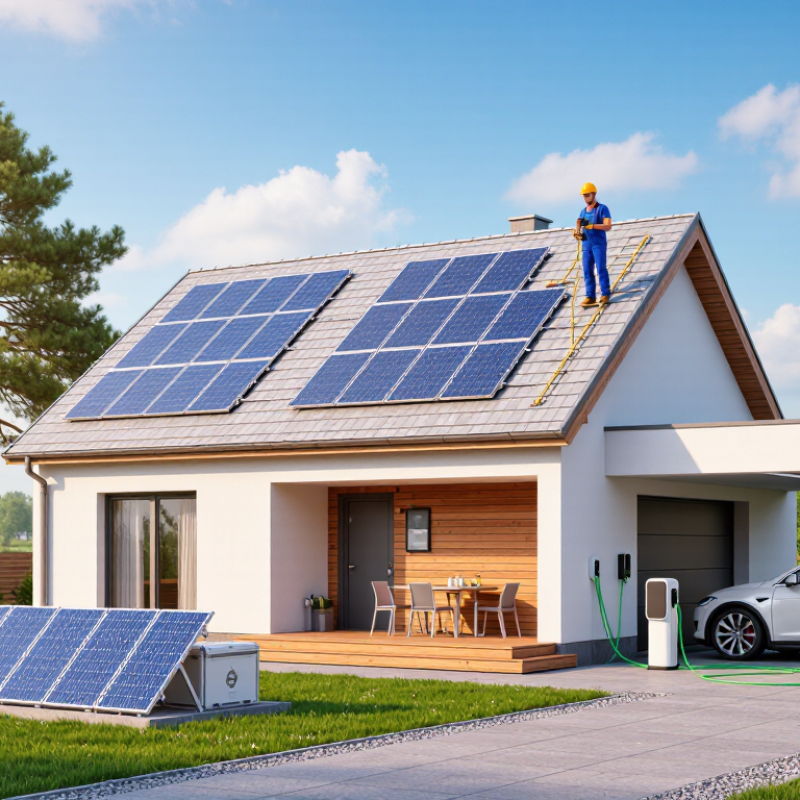
Solar energy systems use different technologies for different needs. Photovoltaic panels convert sunlight directly into electricity through semiconductor cells. Monocrystalline cells usually provide strong efficiency in limited roof space. Thin-film panels can perform better on unusual surfaces, but they often need more area. Solar thermal systems collect heat for water or space heating. They are not the right choice for every home.
Application matters more than appearance. A household with high daytime electricity use may benefit from rooftop photovoltaic panels and a small battery. Batteries store surplus power for evening cooking, lighting, or medical equipment. Remote cabins may require an off-grid system with backup generation and careful load planning. Farms can use solar pumps, while offices may combine panels with smart energy controls. In my rooftop assessment experience, shade from one nearby tree reduced expected output noticeably. I had underestimated seasonal shadows.
Reliable design begins with measured evidence. Check roof direction, local sunlight, wind exposure, electrical demand, and future usage. An installer should provide production estimates based on recognized testing methods, not optimistic guesses. Inspectors should verify wiring, grounding, protection devices, and battery ventilation. Maintenance is usually simple, but dust, heat, and aging components still affect performance. No system is perfect. Even excellent panels produce little power during heavy cloud or snow. A sensible choice balances efficiency, safety, available space, installation skill, and long-term energy habits.
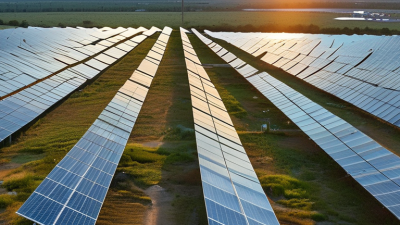
Choosing the best solar solution starts with your energy needs, not an equipment catalogue. Record electricity use for twelve months, including evening and seasonal peaks. Separate essential loads from flexible ones. This clarifies whether you need grid-tied generation, battery storage, or both. IRENA’s Renewable Capacity Statistics 2024 reported about 1,419 GW of global solar capacity at the end of 2023. Solar is mature technology. However, scale does not guarantee a suitable installation.
Site conditions can change the result dramatically. A roof may look sunny while a nearby tree creates winter shading. Check roof age, usable area, structural strength, orientation, tilt, and access for maintenance. The National Renewable Energy Laboratory identifies shading, weather data, tilt, and azimuth as key production factors. The Global Solar Atlas also provides long-term solar irradiation estimates for early screening. Treat those estimates carefully. Local dust, clouds, and unexpected shadows may reduce output.
Tips: Compare twelve months of bills with hourly load data. Measure shadows in the morning, midday, and afternoon. Ask for a site-specific yield model, not a generic promise. Leave room for uncertainty. My own planning mistake would be trusting an annual average too quickly; winter performance often matters more than the headline number. A qualified installer should explain assumptions, losses, degradation, maintenance access, and estimated payback in plain language.
How to Choose the Best Solar Energy Solutions?
Solar panels are only one part of a reliable energy system. IRENA’s Renewable Capacity Statistics 2024 reports that global solar capacity reached 1,419 GW by the end of 2023. This rapid growth makes component quality and system design more important, not less. High-efficiency panels help when roof space is limited, but efficiency alone does not guarantee better output. Orientation, shading, temperature, and dust can change real production. NREL research commonly finds photovoltaic degradation near 0.5% annually, although site conditions vary.
Inverters deserve careful comparison. String inverters usually simplify maintenance and suit roofs with consistent sunlight. Microinverters can reduce the impact of partial shading, but they add equipment across the roof. Check maximum input voltage, monitoring functions, grid-support capability, and replacement access. A larger inverter is not automatically better. Oversizing can increase cost without improving annual generation.
Storage should follow the household’s load profile, not a rough daily estimate. The IEA’s Batteries and Secure Energy Transitions report states that battery demand in the energy sector reached about 120 GWh in 2023, nearly double the previous year. Compare usable capacity, round-trip efficiency, operating temperature, warranty conditions, and backup power limits. System designers should also model seasonal output and evening demand. A battery may look attractive on paper. It can still be poorly matched to a home that uses most electricity at midday. My own review checklist includes one uncomfortable question: what happens during three cloudy days?
Typical performance benchmarks for solar panels, inverters, battery storage, and system design choices
Higher conversion and storage efficiency generally improve usable energy output. Modern photovoltaic modules commonly achieve about 18–23% efficiency, grid-tied inverters about 96–99%, and lithium-based battery systems about 85–95% round-trip efficiency. Fixed south-facing systems typically provide a strong balance of energy yield, cost, and maintenance, while tracking systems can increase production but add mechanical complexity.
Choosing the best solar energy solution starts with a realistic cost assessment. Compare equipment, design, permits, labor, wiring, and possible battery storage. A low quotation may exclude roof repairs or electrical upgrades. Request an itemized proposal and check projected energy production. In my experience, afternoon shade can reduce output more than expected. Roof direction, pitch, and local weather all matter. Payback estimates should use conservative electricity prices, not optimistic predictions.
Incentives can reduce the initial burden, but rules differ by location and change over time. Check government websites and utility documents before signing a contract. Confirm eligibility, application deadlines, tax treatment, and any export-payment limits. Ask whether incentives are paid upfront or claimed later. Keep every receipt and approval record. Small details matter. A qualified installer should explain permits, inspection stages, roof access, and connection requirements in clear language. Verify licenses, insurance, warranties, and recent project references. Do not rely on sales promises alone.
Tips:
Compare at least three detailed quotes. Photograph the roof before work begins. Ask who handles permit corrections. Check whether monitoring data shows daily production and faults. Maintenance is usually simple, but panels still need inspection after severe weather. Dust, leaves, and bird droppings may lower performance. Cleaning schedules depend on rainfall and roof access. Batteries require additional safety checks and replacement planning. I would also leave room in the budget for unexpected repairs. Perfect forecasts are rarely realistic.
How to Choose the Best Solar Energy Solutions?
Selecting a reliable solar provider begins with evidence, not attractive illustrations. Ask for licensing details, insurance coverage, installation experience, and recent customer references. A trustworthy provider should explain system losses, roof orientation, shading, battery behavior, and local permitting requirements in clear language. Request a written production estimate for each season, not only an annual headline figure. Check the equipment warranty, workmanship warranty, maintenance process, and response times. Vague answers deserve caution.
System expansion needs careful planning before installation. Leave space in the electrical panel and choose an inverter that can support future panels or batteries. Ask whether the roof can hold additional modules after several years. The provider should document cable routes, spare capacity, monitoring access, and safety shutdown procedures. A small pilot system may suit a growing household better than an oversized design. Bigger is not always wiser.
Tips: Compare at least three detailed proposals. Read every warranty condition. Confirm who handles permits and grid paperwork. Keep installation photos and equipment records. Test the monitoring app before final payment. I once underestimated afternoon shade from a neighboring tree; the original forecast looked precise, but reality was less cooperative. Recheck assumptions, especially future electricity use. Expansion plans often change after an electric vehicle, heat pump, or home renovation arrives.
| Evaluation Dimension | What to Check | Practical Planning Benchmark | Why It Matters |
|---|---|---|---|
| Provider Qualifications | Installer licensing, electrical qualifications, insurance, safety procedures, and relevant project experience. | Verify the requirements of the local electrical authority and request evidence before signing a contract. | Qualified installation reduces safety risks, inspection problems, and premature equipment failures. |
| System Design | Annual electricity consumption, roof orientation, shading, usable roof area, local weather, and grid conditions. | Use at least 12 months of electricity bills and a site-specific production model rather than a generic estimate. | A properly sized system improves energy yield and helps prevent unnecessary equipment costs. |
| Solar Module Efficiency | Rated power, module efficiency, temperature coefficient, warranty terms, and certification markings. | For current mainstream products, module efficiency is commonly around 19%–23%; compare performance under the same test conditions. | Higher efficiency can provide more generation where roof space is limited, although it may affect the initial price. |
| Performance Degradation | Expected annual power reduction and the guaranteed output at the end of the product warranty period. | Many modern modules specify annual degradation of approximately 0.3%–0.5%, but the contract should state the exact guarantee. | Lower degradation supports more predictable long-term energy production. |
| Inverter Selection | Inverter capacity, efficiency, monitoring functions, replacement policy, operating temperature range, and expansion compatibility. | Confirm that the inverter can support the planned array size and any future battery or generation additions. | The inverter controls the conversion of direct current to usable alternating current and is central to system monitoring. |
| Battery Storage | Usable capacity, continuous power, round-trip efficiency, operating temperature, cycle warranty, and emergency-backup capability. | Size the battery according to evening demand, backup priorities, tariff periods, and the available solar surplus—not only total daily consumption. | A correctly sized battery can improve self-consumption and provide backup for selected loads. |
| Warranty Coverage | Separate product, performance, workmanship, inverter, battery, and roof-penetration warranties. | Request written terms, exclusions, labor coverage, claim procedures, and the party responsible for warranty service. | Different components have different warranty conditions; combining them under one vague promise creates avoidable risk. |
| Monitoring and Reporting | Mobile or web monitoring, historical production data, fault alerts, consumption tracking, and data ownership. | The system should report generation and faults at equipment or system level and retain usable historical data. | Reliable data makes it easier to identify shading, equipment faults, and unexpected performance losses. |
| Grid Connection | Interconnection approval, export limits, meter replacement, protection settings, and local utility requirements. | Obtain written confirmation of grid requirements before equipment procurement or installation. | Approval delays or export restrictions can change the system design and expected financial return. |
| System Expansion Plan | Available roof area, spare inverter capacity, electrical panel capacity, cable routes, battery location, and structural limits. | Design conduits, switchgear, communications, and mounting zones with future modules or storage in mind. | Early planning can reduce the cost and disruption of adding capacity later. |
| Financial Assessment | Installed price, incentives, energy-price assumptions, export compensation, maintenance, financing cost, and payback period. | Compare proposals using total cost of ownership and sensitivity scenarios for lower production, higher prices, and equipment replacement. | A transparent model helps distinguish realistic savings from estimates based on optimistic assumptions. |
| Installation Timeline | Site survey, design approval, permits, equipment availability, installation, inspection, and grid activation. | Require a milestone-based schedule with responsibilities for permits, inspections, and commissioning. | Clear milestones reduce uncertainty and help coordinate financing, property work, and utility approvals. |
| Maintenance Requirements | Visual inspections, monitoring reviews, vegetation control, cleaning needs, and corrective service procedures. | Keep monitoring active, maintain clear access to equipment, and follow the manufacturer’s inspection guidance. | Routine oversight can reveal faults early and preserve system availability. |
| Contract Transparency | Detailed equipment list, energy estimate, payment schedule, change-order rules, ownership, removal terms, and dispute process. | The signed agreement should identify model numbers, assumptions, exclusions, completion criteria, and all additional fees. | A detailed contract protects both the buyer and the installer when site conditions or project requirements change. |

If you’re replacing your roof and already have solar panels installed, you’ll likely need solar panel removal and reinstall during the process. When planned correctly,
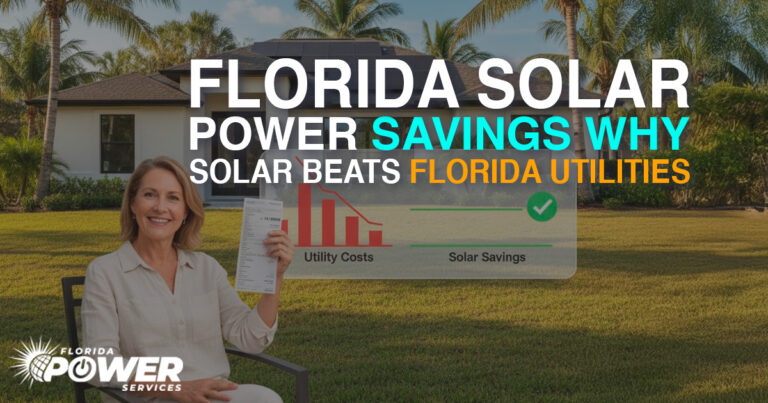
Florida homeowners are seeing their power bills rise faster than ever. Between AI data centers, fuel costs, and storm-related grid upgrades, utilities are increasing rates

⏳Go Solar Before the Deadline Permitting in Pinellas County solar jurisdictions is already experiencing serious delays. Plan reviews are running 4+ weeks behind. That means

NABCEP Certified
PV Installer

Licensed &
Insured

Systems Engineered
For A 25 Year Life Cycle

Over 4 Megawatts
Of Solar Installed

Expert Service In The
Unlikely Event Of
An Issue
Florida Power Services
"The Solar Power Company"
Florida Power Services
"The Solar Power Company"
based on 62 reviews
Florida Power Services
"The Solar Power Company"
based on 33 reviews


Utility rates rise 4–6% every year. Solar converts that rising expense into an asset that can pay for itself, and once it’s paid off, your power is essentially free. Many property owners qualify with no money out of pocket.