
Solar Panel Removal and Reinstall for Roof Replacement in Florida
If you’re replacing your roof and already have solar panels installed, you’ll likely need solar panel removal and reinstall during the process. When planned correctly,

Choosing an Electric Quadricycle for business is not simply a matter of comparing prices. It is a decision about daily work, customer access, operating costs, and driver confidence.
Vincent Cobée, former Citroën CEO, described the Ami as “not a car, but an object of mobility.” That distinction matters. An Electric Quadricycle may suit short urban deliveries, campus transport, maintenance visits, or local service routes. It may not suit every business. A vehicle with limited range can become frustrating when schedules change. Small cargo space can also create hidden costs.
Start with the route, not the brochure. Record daily distance, road gradients, traffic conditions, parking limits, and charging opportunities. Then examine payload capacity, cabin protection, battery warranty, charging time, turning radius, and after-sales support. Ask a dealer for a practical demonstration with your real equipment inside. A polished showroom test is not enough.
Think about winter mornings.
Business operators should also check local classification, access, insurance, safety, and driver requirements before purchase. These details vary by market. Reliable suppliers should explain them clearly and provide written documentation. Vague promises deserve caution.
An experienced fleet manager may value uptime more than the lowest purchase price. That lesson is easy to miss. I would also question optimistic range figures, especially with heavy loads, cold weather, or frequent stops. The right Electric Quadricycle is not necessarily the fastest or cheapest model. It is the one that performs consistently on your actual route, with manageable risks and measurable business value.
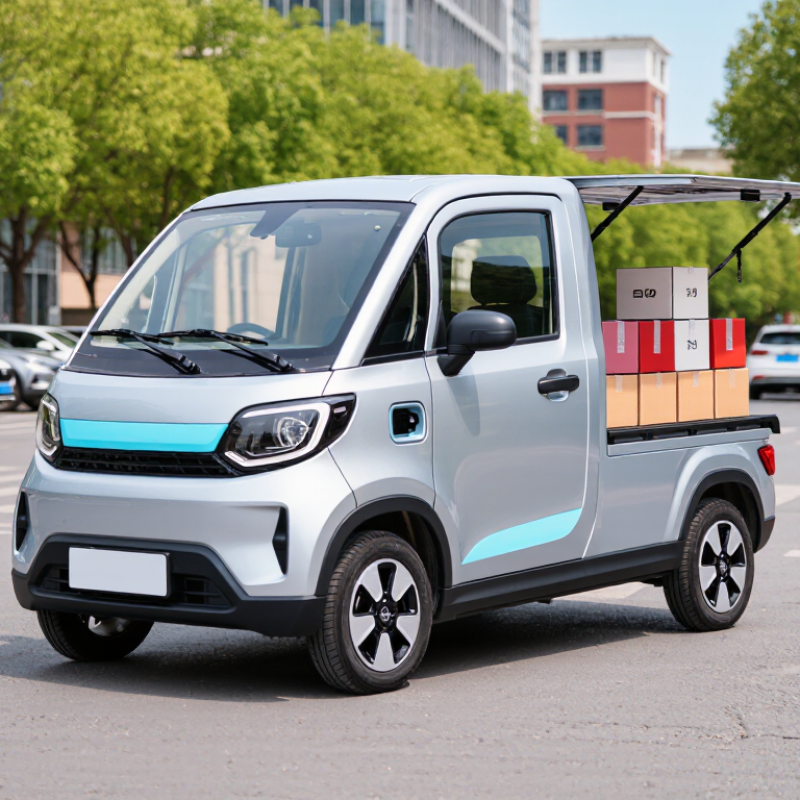
Choosing an electric quadricycle starts with the delivery route, not the showroom.
Under EU Regulation 168/2013, L6e vehicles are limited to 45 km/h. Their electric motor output is generally capped at 4 kW. They suit compact urban work, short routes, and narrow streets. Think of a bakery delivery between nearby districts, with frequent stops and limited cargo. Low speed can improve safety, but it may frustrate drivers on faster roads.
L7e models serve heavier commercial duties. Their maximum continuous rated power can reach 15 kW, while speed depends on the approved vehicle category and configuration. A 15 kW limit does not automatically mean stronger real-world performance. Battery voltage, thermal control, payload, and hill grades matter more than a specification sheet suggests. Test the vehicle with tools, parcels, and a nearly empty battery. That detail is often missed.
The International Energy Agency reported that global electric car sales exceeded 17 million in 2024, showing rapidly expanding electric-vehicle experience. However, quadricycle data remains less standardized than passenger-car data. Fleet managers should record energy use per route, charging downtime, and winter range for at least two weeks. European Commission transport guidance also emphasizes matching vehicle dimensions with urban operating conditions. A narrow L6e may reduce parking stress. An L7e may carry more, yet demand wider loading space and stricter route planning. Real business needs are rarely perfectly classified. That is the uncomfortable part.
Choosing an electric quadricycle starts with delivery evidence, not brochure range. The World Economic Forum’s 2020 Future of the Last-Mile Ecosystem projected urban delivery demand could rise 78% by 2030. That pressure makes wasted capacity expensive. For two to four weeks, record every stop, parcel weight, package dimensions, route length, gradient, and return load. Use the busiest day, not the weekly average.
Payload and cargo volume are different constraints. A compartment may look full while remaining below its weight limit, or carry heavy goods with unused air. Set a working payload target below the rated maximum. A 10–15% buffer can absorb seasonal variation and imperfect loading. Then examine axle loads. Place dense items low and near the designed center, rather than stacking them against one corner. A portable platform scale can reveal an uncomfortable truth: total mass may be acceptable, but one axle is overloaded.
Energy planning should follow the same log. The IEA’s Global EV Outlook 2024 recorded more than 14 million electric car sales in 2023. That growth supports charging investment, but does not prove every route is suitable. Compare measured daily energy use with usable battery capacity, including cold weather, hills, and refrigeration. I once overestimated capacity because empty crates were ignored. Recheck the numbers. A smaller quadricycle may win when its usable volume, axle balance, and charging window fit the actual route.
How to Choose an Electric Quadricycle for Your Business?
Battery capacity is only the starting point. A 10 kWh battery may appear sufficient, yet payload, hills, traffic, and cold weather reduce usable range. The International Energy Agency reports that real-world energy use often exceeds laboratory figures, especially in commercial driving. Ask for tested range under a loaded condition, not an empty-vehicle estimate. A useful trial includes several delivery stops, repeated braking, and heating or cooling switched on.
Range matters more than headline capacity. For example, a vehicle using 12 kWh per 100 kilometers may travel about 83 kilometers from a 10 kWh pack. Usable energy is lower after reserve limits and battery protection. Geotab’s 2024 EV Battery Health Report found average battery degradation near 1.8% annually, although climate and charging habits change results. Plan around the vehicle’s range after several years. That is less exciting, but safer.
Charging power must match operating hours. A 3.7 kW charger adds roughly 15 to 20 kilometers of practical range per hour, depending on efficiency. A 7.4 kW connection can nearly double that, if the site supports it. The U.S. Department of Energy classifies Level 2 charging broadly from 3 to 19.2 kW. Faster is not always better. Installation limits, electricity tariffs, and shared workplace capacity may matter more. My first estimate was too optimistic. Measure daily kilometers, charging windows, and peak loads for at least one working week before choosing the battery.
Choosing an electric quadricycle starts with usage, not purchase price.
Record daily mileage, payload, gradients, charging time, and electricity tariffs. The IEA’s Global EV Outlook 2024 reports that electric drivetrains use far less final energy than combustion systems. However, a small commercial vehicle may consume 10–18 kWh per 100 kilometres, depending on weather and load. Treat this as a planning range, not a promise.
For example, 25,000 annual kilometres at 14 kWh per 100 kilometres requires 3,500 kWh. At $0.18 per kWh, energy costs reach about $630 yearly. Add charging losses, demand charges, and occasional public charging.
The U.S. Department of Energy’s Alternative Fuels Data Center identifies fewer moving parts and reduced fluid servicing as key maintenance advantages. Still, tyres, brakes, suspension parts, insurance, and battery testing remain real expenses. Create a five-year spreadsheet with energy, scheduled maintenance, downtime, financing, and resale assumptions. BloombergNEF’s 2024 battery price survey reported an average pack price of $115 per kWh, but that figure does not equal a commercial replacement quote.
Tips: Measure one representative route for two weeks. Keep winter data separate. Ask service providers for labour rates and inspection intervals. Use your actual tariff. A spreadsheet can still lie when charging access is unreliable. My first estimate would likely ignore lost delivery time, especially when one vehicle serves several routes. Include a small contingency, but review it after the first quarter.
Choosing an electric quadricycle for business use requires more than comparing range, payload, and purchase price. Safety and legal conformity should guide the shortlist.
Ask for complete homologation documents before signing anything. These should identify the vehicle category, approved speed, dimensions, weight limits, lighting, braking systems, seatbelts, and identification records. Confirm that the approval applies to your intended market and operating conditions. A vehicle approved elsewhere may not satisfy local requirements. Check the details.
Inspect the actual vehicle, not only the certificate. Test emergency braking, steering response, visibility, door latches, mirrors, warning signals, and battery protection. Measure loading space with real equipment, because catalog figures can create false confidence. Include slopes, narrow gates, rough surfaces, and frequent stops in the trial. Small weaknesses become expensive across a fleet.
Fleet compliance also depends on daily controls. Create inspection sheets for tires, brakes, lights, charging cables, battery damage, and safety equipment. Keep service records and train drivers on charging, parking, load distribution, and pedestrian awareness. Verify insurance, registration, workplace procedures, and maintenance responsibilities with qualified local advisers. No checklist is perfect. Teams sometimes overlook software updates or temporary route changes. Review those risks after the first month, then adjust the operating rules.
EU L-category homologation thresholds to verify before purchase
The chart compares key EU type-approval limits for L6e light quadricycles and L7e heavy quadricycles. L6e vehicles are limited to 4 kW of continuous rated power and 425 kg unladen mass, while L7e vehicles are limited to 15 kW and up to 450 kg for passenger vehicles or 600 kg for goods vehicles. Confirm the exact subcategory, battery-weight treatment, national registration rules, safety equipment, and fleet documentation before purchase.

If you’re replacing your roof and already have solar panels installed, you’ll likely need solar panel removal and reinstall during the process. When planned correctly,
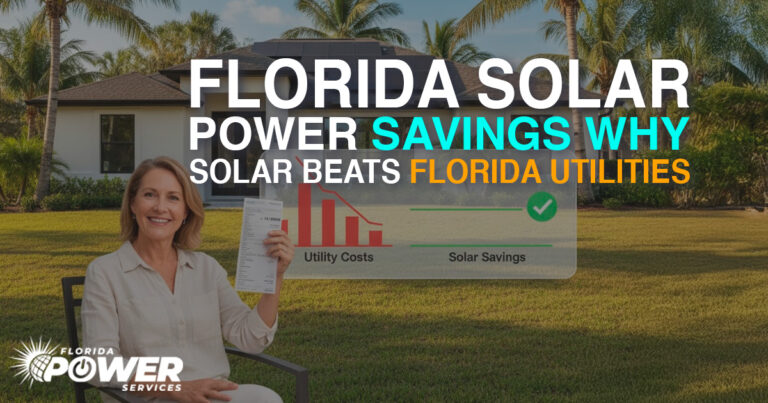
Florida homeowners are seeing their power bills rise faster than ever. Between AI data centers, fuel costs, and storm-related grid upgrades, utilities are increasing rates

⏳Go Solar Before the Deadline Permitting in Pinellas County solar jurisdictions is already experiencing serious delays. Plan reviews are running 4+ weeks behind. That means

NABCEP Certified
PV Installer

Licensed &
Insured

Systems Engineered
For A 25 Year Life Cycle

Over 4 Megawatts
Of Solar Installed

Expert Service In The
Unlikely Event Of
An Issue
Florida Power Services
"The Solar Power Company"
Florida Power Services
"The Solar Power Company"
based on 62 reviews
Florida Power Services
"The Solar Power Company"
based on 33 reviews


Utility rates rise 4–6% every year. Solar converts that rising expense into an asset that can pay for itself, and once it’s paid off, your power is essentially free. Many property owners qualify with no money out of pocket.