7 Best Spa Chillers for Global Buyers in 2026?
Choosing the right Spa Chiller in 2026 requires more than comparing cooling capacity or purchase price. Global buyers face different climates, electrical systems, water conditions, and service realities. A model that performs quietly beside a private villa may struggle in a humid resort, where heat, dust, and continuous circulation create heavier demands.
Steve Barnes, a longtime spa-equipment specialist, offers a practical reminder: “Reliability is measured by performance over time, not by specifications alone.” That principle shapes this guide to the seven best Spa Chiller options for international buyers. Each selection is considered through cooling efficiency, temperature stability, operating noise, footprint, corrosion resistance, control compatibility, and after-sales support.
Small details can become expensive problems.
A 230-volt unit may not suit every installation. A compact chiller may also require generous airflow around its condenser. Buyers should verify refrigerant requirements, local electrical standards, water-flow rates, and replacement-part availability before ordering. These checks are less exciting than a sleek product photograph, but they protect the investment.
This guide is not a perfect ranking. It reflects a practical comparison, and some conclusions may change with climate, usage, and installation quality. A high-efficiency unit can still disappoint when filters remain blocked or ventilation is restricted. That uncomfortable point deserves attention.
The following review compares seven leading Spa Chiller solutions for 2026, helping distributors, contractors, hotel operators, and private owners make a clearer, more defensible purchasing decision.
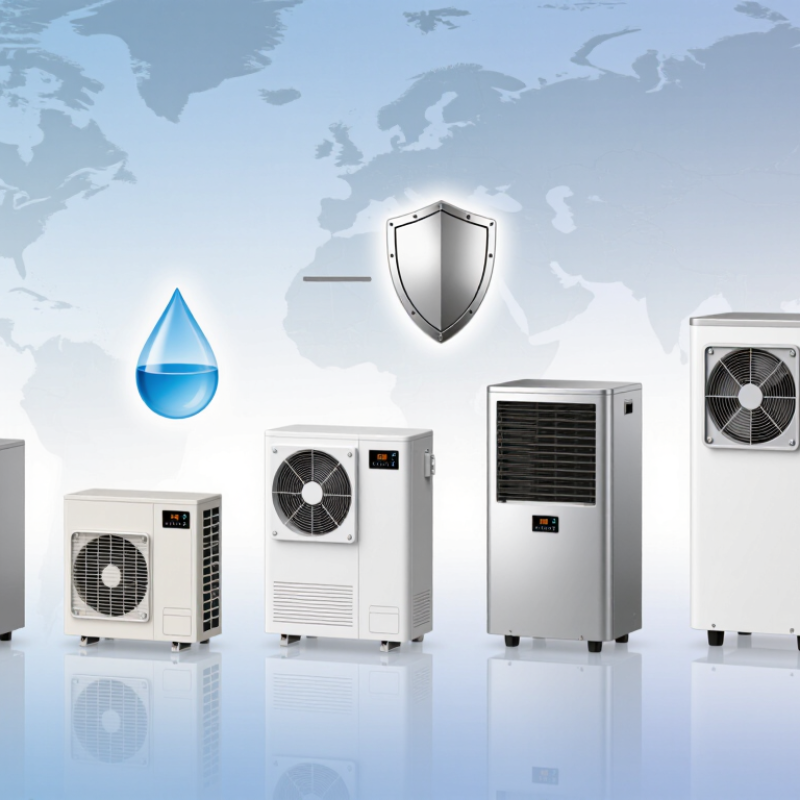
What Is a Spa Chiller and How Does It Work?
A spa chiller is a cooling machine that lowers water temperature for recovery, therapy, or controlled cold-water sessions. It works much like a reverse heater. A circulation pump moves warm spa water through a heat exchanger. Refrigerant then absorbs heat from the water and carries it toward the compressor. The condenser releases that heat into surrounding air or a separate water circuit.
The process sounds simple. Real installations are less tidy. Water flow, ambient temperature, insulation, and sunlight can change performance sharply. A 1,500-liter spa may cool differently in a shaded clinic than on a sunny hotel terrace. A controller measures water temperature and starts the compressor when cooling is needed. Many systems also include filters, flow switches, temperature sensors, and automatic protection against freezing or low water flow.
For global buyers, capacity should match the spa volume and the desired cooling time. Oversizing may increase purchase and electrical costs, while undersizing can produce long compressor cycles. Check voltage, frequency, heat-rejection space, noise levels, and service access before comparing seven leading options. Refrigerant type also deserves attention because regional environmental rules differ. Certified electrical protection matters near water. Installation manuals should state pipe sizes, maximum flow, drainage needs, and operating limits clearly. One detail is often missed: a chiller may cool water efficiently but still warm a small indoor room. Ventilation is not optional.
Key Specifications for Comparing Spa Chillers in 2026
When comparing the seven best spa chillers for global buyers in 2026, start with capacity, not appearance. Calculate heat gain from water volume, cover use, sunlight, room temperature, and bather traffic. A 2,000-litre spa may need a very different chiller from a 5,000-litre commercial unit. Check cooling capacity in kW, leaving-water temperature, flow rate, and acceptable pressure loss. Measure the real load.
Efficiency deserves careful reading. AHRI Standard 550/590-2023 provides recognized methods for rating water-chilling equipment, but spa conditions may differ from laboratory conditions. Ask for COP or EER at several ambient temperatures, especially 35°C and 40°C. A neat COP number can mislead. ASHRAE’s 2023 HVAC Applications guidance also supports evaluating part-load operation, condenser airflow, and maintenance access. Seasonal performance may matter more than the headline rating.
Water chemistry is another practical filter. Select titanium or suitably protected heat exchangers when chlorine, bromine, or salt systems are used. Confirm the required filtration level and maximum flow. Check sound pressure in dB(A), electrical frequency, voltage, IP protection, refrigerant status, and service support in the destination country. The International Energy Agency reported that cooling demand is rising with global warming, making efficient heat rejection increasingly important. I would still challenge every brochure figure. Real installation data, warranty conditions, and local climate testing reveal more than polished specifications.
The 7 Best Spa Chillers for Global Buyers in 2026
The 7 Best Spa Chillers for Global Buyers in 2026
Choosing the best spa chiller depends on water volume, climate, and daily usage.
A compact air-cooled unit suits small home spas. Larger spas need stronger water flow and heat rejection. In humid regions, corrosion-resistant coils can improve service life. Variable-speed compressors often reduce noise and electricity use, though their controls may require skilled installation. Reliable chillers should include temperature sensors, overload protection, clear error codes, and accessible filters. Remote monitoring is useful for hotels, but it can add setup costs and privacy concerns.
The seven strongest options for global buyers include compact residential chillers, high-flow commercial models, quiet inverter units, saltwater-compatible systems, energy-saving models, portable units, and modular chillers for expanding facilities. These categories serve different needs. A portable model may help during seasonal events, but it usually has less cooling capacity. Modular equipment offers flexibility, yet poor pipe sizing can reduce performance. I have seen buyers focus on purchase price and overlook replacement filters, shipping damage, and local voltage requirements. That mistake becomes expensive.
Tips: Measure the spa volume twice. Check ambient temperature ratings and electrical standards before ordering. Confirm spare-part availability in your country. Install a flow switch and keep the condenser clean. Leave ventilation space around the unit. Test the water temperature under real operating conditions, not only in a showroom. Saltwater compatibility should be verified in the technical manual, because marketing terms can be unclear.
7 Best Spa Chillers for Global Buyers in 2026? - The 7 Best Spa Chillers for Global Buyers in 2026
Comparison of Seven Spa Chiller Configurations for International Buyers | Rank | Recommended Use | Nominal Cooling Capacity | Typical Spa Volume | Estimated COP | Operating Temperature Range | Rated Water Flow | Electrical Configuration | Approx. Sound Level | Approx. Weight |
| 1 | Compact air-cooled chiller | 3.0 kW / 10,200 BTU/h | 800–1,500 L | 4.2–4.8 | 5–40°C water | 2.5–4.0 m³/h | 220–240 V, single-phase, 50/60 Hz | 48–55 dB(A) | 45–60 kg |
| 2 | Residential efficiency chiller | 5.0 kW / 17,100 BTU/h | 1,200–2,500 L | 4.5–5.2 | 5–40°C water | 3.5–5.5 m³/h | 220–240 V, single-phase, 50/60 Hz | 50–57 dB(A) | 60–80 kg |
| 3 | Variable-speed premium chiller | 7.5 kW / 25,600 BTU/h | 2,000–4,000 L | 5.0–5.8 | 5–40°C water | 5.0–8.0 m³/h | 220–240 V, single-phase, 50/60 Hz | 48–55 dB(A) | 80–105 kg |
| 4 | Low-noise commercial chiller | 10 kW / 34,100 BTU/h | 3,000–5,500 L | 4.6–5.3 | 5–40°C water | 7.0–11.0 m³/h | 220–240 V single-phase or 380–415 V three-phase | 52–60 dB(A) | 110–145 kg |
| 5 | Modular spa-facility chiller | 12 kW / 41,000 BTU/h | 4,000–7,000 L | 4.5–5.1 | 5–40°C water | 8.0–13.0 m³/h | 380–415 V, three-phase, 50/60 Hz | 55–63 dB(A) | 135–175 kg |
| 6 | Heavy-duty commercial chiller | 18 kW / 61,400 BTU/h | 6,000–10,000 L | 4.2–4.9 | 5–40°C water | 12.0–19.0 m³/h | 380–415 V, three-phase, 50/60 Hz | 58–67 dB(A) | 190–250 kg |
| 7 | Large-capacity spa complex chiller | 30 kW / 102,400 BTU/h | 10,000–18,000 L | 4.0–4.7 | 5–40°C water | 20.0–32.0 m³/h | 380–415 V, three-phase, 50/60 Hz | 62–72 dB(A) | 300–420 kg |
Technical figures are representative selection ranges for air-cooled spa chillers. Actual performance depends on water temperature, ambient temperature, refrigerant circuit design, installation airflow, pipework, and local electrical standards. Cooling capacity is commonly stated at approximately 26°C entering water and 35°C ambient air; confirm certified data before purchasing.
How to Match Chiller Capacity to Spa Size and Climate
For global buyers comparing the seven best spa chillers in 2026, capacity should match water volume and local climate. A larger spa does not always need the largest chiller. Measure the spa’s actual water volume, plumbing length, cover quality, and expected bather load. A 1,000-liter spa used by two people needs less cooling than the same spa used by eight guests.
Climate changes the calculation significantly. In a cool coastal region, a 2–3 kW chiller may cool a medium spa efficiently. In a hot, humid location, the same spa may require 4–6 kW, especially outdoors under direct sunlight. Target a practical temperature drop, such as reducing water from 38°C to 30°C, rather than choosing capacity by volume alone. Hot afternoons matter.
Short cycles waste energy.
Check the manufacturer’s cooling output at your real ambient temperature, not only laboratory conditions. Ask for performance data at 35°C or 40°C air temperature when buying for tropical markets. A reliable installer should also review electrical supply, ventilation clearance, and condensate drainage. Oversizing can increase purchase costs and cause frequent cycling. Undersizing may leave water warm overnight. I have seen both mistakes happen when buyers ignored the cover and daily usage pattern. Recheck the estimate after installation, because shade, wind, and guest behavior can change actual performance.
Installation, Maintenance, Energy Use, and Buying Considerations
7 Best Spa Chillers for Global Buyers in 2026
Installation quality often determines whether a spa chiller performs well. Size it from heat-load calculations, not water volume alone. Include sunlight, user occupancy, cover performance, and local ambient temperature. ASHRAE Handbook—HVAC Applications recommends designing around actual operating conditions rather than catalogue assumptions. Leave service clearance around the condenser. Install a flow switch, strainer, isolation valves, and reliable drainage. A poorly placed unit may recirculate hot air. That mistake is expensive.
Maintenance should be practical. Clean condenser coils monthly in dusty locations. Check water flow, filters, electrical connections, and refrigerant symptoms during scheduled visits. Water chemistry also matters. Scale can reduce heat transfer and quietly increase compressor runtime. The U.S. Department of Energy notes that clogged or dirty heat-transfer surfaces reduce equipment efficiency. I would not trust a “maintenance-free” claim. It sounds convenient, but field conditions are rarely clean.
Energy use deserves closer attention. The International Energy Agency reported that buildings consumed about 30% of global final energy in 2022, making efficient cooling decisions important. Compare input power, cooling capacity, seasonal efficiency, standby consumption, noise, and performance at high outdoor temperatures. Ask for test conditions under AHRI 550/590 or an equivalent recognized procedure. One rating can mislead. Request operating data at your real water temperature and voltage. Also verify local service access, refrigerant documentation, corrosion protection, warranty terms, and replacement-part availability before buying.
7 Best Spa Chiller Configurations for Global Buyers in 2026
Comparison of representative spa chiller configurations by nominal cooling capacity and electrical input power. The figures reflect typical air-cooled commercial and residential spa applications, while actual performance varies with water temperature, ambient conditions, refrigerant circuit design, and operating load.
Installation Most systems require a level base, correct water-flow protection, electrical isolation, drainage, and adequate airflow. Typical installation time is 1–3 working days.
Maintenance Clean air-coil surfaces regularly, inspect filters and pumps, verify refrigerant-side performance, and check electrical connections at least once per year.
Energy use A higher cooling-capacity-to-input-power ratio generally indicates better efficiency. Actual annual consumption depends mainly on setpoint, ambient temperature, insulation, and operating hours.
Data basis: representative engineering benchmarks for air-cooled spa chillers operating near standard commercial water-cooling conditions. Cooling capacity is measured in kW of thermal cooling; electrical input is the approximate full-load compressor and fan demand.