
2026 Top Portable Car Charging Types for Global Buyers?

Portable Car Charging is becoming a practical backup for drivers who travel beyond dependable charging networks. In 2026, global buyers will compare more than battery capacity. They will examine charging speed, connector compatibility, weather resistance, safety systems, and service support.

The main types include battery-powered charging units, vehicle-to-vehicle chargers, solar-assisted systems, and compact portable EVSE cables. Each option suits a different situation. A battery unit may help after a remote roadside stop. A vehicle-to-vehicle system can transfer energy between compatible cars. Solar-assisted equipment sounds attractive, but its output may remain limited under cloudy skies. Small details matter, such as a five-meter cable, a clear screen, or a sealed enclosure during rain.

Josh Aviv, founder and CEO of SparkCharge, describes this direction simply: “We are building the gas station of the future.” His view reflects a real shift from fixed charging sites toward flexible energy access. Still, no ranking is perfect. A lightweight charger may lack useful range. A powerful model may be difficult to carry. Buyers should verify local plug standards, vehicle compatibility, warranty terms, and independent safety testing before purchasing. Regional infrastructure also changes the answer. A product suitable for a European motorway may not fit a rural route in Australia or North America. This guide compares the leading Portable Car Charging types for global buyers, while recognizing one uncomfortable truth: convenience often requires compromise.
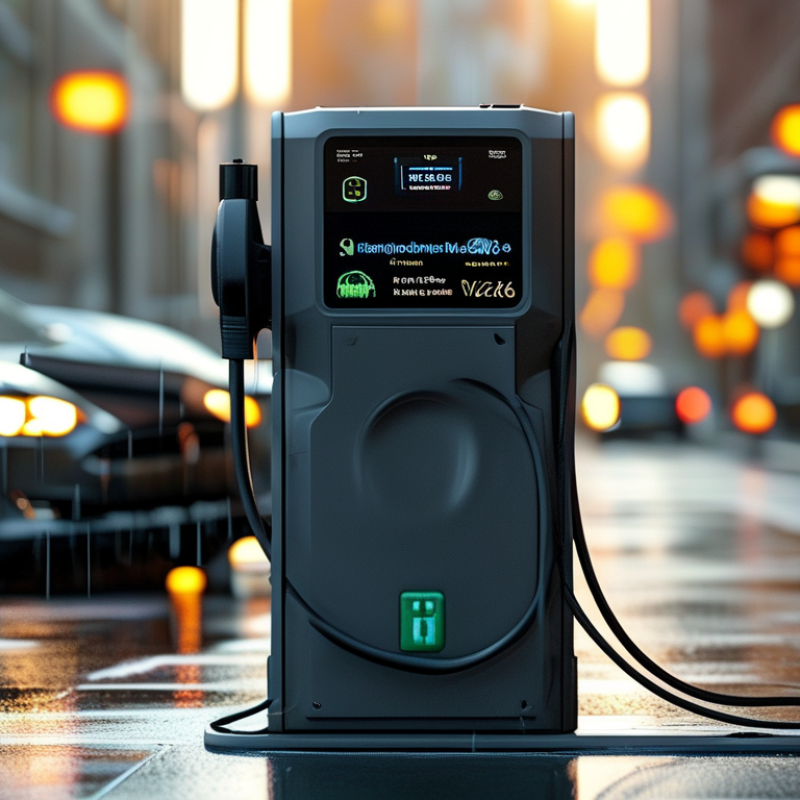
2026 Top Portable Car Charging Types for Global Buyers?

Portable Car Charging: Definition, Purpose, and Key Applications

Portable car charging refers to equipment that delivers electricity to an electric vehicle away from a permanent charging station. It may use a household outlet, a higher-rated AC connection, or an onboard battery pack. Some newer systems also combine battery storage with solar input. The purpose is practical: provide extra driving range, backup power, or charging access where fixed infrastructure is limited.

In daily use, portable chargers support apartment residents, travelers, roadside technicians, and small fleet operators. A compact AC unit can add energy during an overnight stay. A battery-based charger can help after a low-charge warning, although its capacity is limited. Charging speed depends on voltage, current, cable quality, vehicle compatibility, and temperature. Wet ground, damaged connectors, and overloaded outlets create real safety concerns. Use equipment with clear ratings, protective shutoff functions, and instructions suited to the local electrical system.

The best type depends on the application, not only the advertised power. AC chargers are usually lighter and simpler for planned charging. DC battery units can respond faster but often weigh much more. Solar-assisted models may support remote work, yet cloudy weather reduces their output. This detail is easy to overlook. A portable charger is helpful, but it is not a magic replacement for reliable infrastructure. Users should inspect cables, keep ventilation around battery units, and test the equipment before an emergency. Even experienced owners can misjudge charging time when temperatures fall.

How Portable Car Chargers Work and Their Main Power Sources

How Portable Car Chargers Work and Their Main Power Sources

Portable car chargers transfer electricity through a controlled connection between a power source and the vehicle. For electric cars, a portable AC charger usually manages current, checks grounding, and sends power to the car’s onboard charger. The onboard unit then converts AC electricity into DC power for the battery. Some portable DC chargers include their own conversion equipment and battery storage, allowing faster charging in places without fixed stations. The process sounds simple. It is not always simple.

The main power sources are household AC outlets, industrial sockets, portable generators, and battery energy stations. Solar panels can recharge a battery station, but direct solar charging is usually slow and unstable under clouds. Voltage, plug shape, grounding, and current limits differ across markets. Buyers should check these details before connecting a charger. A higher output rating does not guarantee faster charging, because the vehicle may accept less power. That mistake is common. I would also avoid treating emergency charging as a daily replacement for a properly installed system.

Tips: Check the vehicle’s maximum charging input first. Use a charger with clear safety testing and temperature protection. Keep cables away from standing water, hot surfaces, and moving wheels. Test the outlet with a qualified electrician if its condition is uncertain. Leave space around the control box for ventilation. Portable charging is convenient, but convenience can hide weak sockets, voltage drops, or poor cable handling.

2026 Top Portable Car Charging Types for Global Buyers

How portable car chargers work and their main power sources: battery-powered USB-C chargers and vehicle 12V adapters deliver low-voltage DC power, while portable EV chargers convert household AC power into regulated current for the vehicle battery.

The chart shows representative rated output, not guaranteed charging speed. USB-C Power Delivery commonly reaches 100 W in portable products, while the USB PD specification supports up to 240 W with compatible equipment. A 12 V socket rated at 10 A provides approximately 120 W. Portable EV Level 1 and Level 2 examples use 120 V × 12 A and 240 V × 32 A respectively; actual limits vary by country, circuit, vehicle, and charger.

Top Portable Car Charging Types for Global Buyers in 2026

Portable car charging is becoming more practical for global buyers in 2026. The main options include portable AC chargers, battery-powered charging stations, and solar-assisted systems. A portable AC charger connects to a household outlet and usually offers adjustable current settings. It works well for overnight charging near homes, hotels, or workplaces. Battery-powered units can provide emergency energy when no outlet is available. Solar charging sounds attractive, yet cloudy weather and limited panel output reduce its reliability.

Real-world performance is less neat. A compact charger may be easy to store but slower than a fixed wall unit. Check the vehicle inlet, charging speed, cable length, and plug format before purchasing. A matching plug is not enough. Buyers must also confirm local voltage, outlet capacity, and charging compatibility. Models supporting both 110–120V and 220–240V systems can suit more travel plans, but users still need proper electrical advice.

Safety should guide every comparison. Look for overcurrent, overheating, leakage, and ground-fault protection. Choose weather-resistant equipment for driveways, campsites, and roadside use. A warm socket is a warning sign. Stop charging immediately. Independent safety testing and clear technical documents add credibility, especially when buying across borders. My early assumption was that higher power always meant better value. In practice, a moderate charger with stronger protection may be more useful for daily travel. No single type fits every route, climate, or electrical system.

Safety Standards, Compatibility, and Charging Performance

2026 Top Portable Car Charging Types for Global Buyers

Portable charging is not simply a cable with a plug. Common options include Mode 2 AC chargers, portable AC wallboxes, and battery-powered DC units. Each type needs different safety controls.

Look for protection against overcurrent, overheating, leakage, and grounding faults. Standards such as IEC 61851 and IEC 62196 provide useful references, but local certification still matters. A weather-resistant enclosure helps outdoors, although no device should remain exposed during heavy rain.

Compatibility deserves careful checking. Match the charger plug with the vehicle inlet and the destination socket. Confirm voltage, frequency, phase, and maximum current before buying.

The car’s onboard charger sets the real AC charging limit. A 7.4 kW supply cannot force a 3.6 kW onboard system to charge faster. Battery-powered DC chargers may reduce waiting time, but they are heavier and require careful battery management. Higher output is not automatically better.

Tips: Check the vehicle manual and socket rating. Test the cable indoors first. Keep adapters to a minimum. Inspect pins, seals, and strain relief regularly. Charging performance also changes with battery temperature, cable length, and grid quality. The honest limitation is simple: advertised speed is only a possibility. In real use, safety and compatibility usually matter more.

How to Choose the Right Portable Car Charger for Different Markets

For global buyers, the right portable car charger begins with the vehicle, not the advertisement. A plug-in hybrid may need less power than a long-range electric car. Check the vehicle inlet, maximum AC input, and cable requirements. Portable Level 1 chargers suit overnight charging from standard outlets. Level 2 chargers reduce charging time but require a stronger electrical supply. Portable DC chargers can support commercial fleets, yet their weight and price limit personal use. More power is not always better.

Market conditions can change the decision. Many European homes use 230-volt electricity, while other regions commonly use 110 or 120 volts. Connector formats also differ. Confirm the local socket, plug, and vehicle inlet before ordering. Rural drivers may value a longer cable and weather-resistant housing. In hot climates, thermal monitoring matters more than a decorative screen. Cold weather can slow battery acceptance and extend charging time. Check destination-market safety requirements and recognized testing marks.

A dependable buying process includes checking adjustable current settings, ground-fault protection, temperature control, and clear fault indicators. Read the manual before comparing charging speed. A compact charger may sacrifice cable length. A high output rating may remain unused by the vehicle. That trade-off deserves honest review. No portable charger fits every market perfectly. The best choice matches local electricity, driving habits, climate, storage space, and the car’s actual charging limits.

2026 Top Portable Car Charging Types for Global Buyers? - How to Choose the Right Portable Car Charger for Different Markets

Portable Charging Type Typical Input Typical Output Vehicle Connection Best-Fit Markets or Situations Main Advantages Important Limitations Buyer Selection Checklist
Single-Phase AC Mode 2 Charger 100–120 V or 220–240 V AC; usually 8–16 A from a household outlet Approximately 0.9–1.9 kW at 100–120 V, or 1.8–3.7 kW at 220–240 V Regional AC connector such as Type 1, Type 2, or GB/T AC North American homes, European residential use, overnight charging, travel backup, and locations without dedicated EV infrastructure Lowest purchase cost; compact; works with widely available household sockets; suitable for long parking periods Slow charging; household sockets may not support continuous high current; socket condition and circuit capacity must be checked Confirm plug format, rated current, residual-current protection, temperature monitoring, cable length, and local electrical regulations
Adjustable-Current AC Portable Charger Single-phase 100–120 V or 220–240 V AC, depending on the supplied plug and adapter Common selectable ranges include 6–16 A, with maximum power up to about 3.7 kW on a 230 V circuit Type 1, Type 2, or GB/T AC, depending on vehicle and market Global buyers who use different outlets, rental properties, campsites, or older residential circuits Allows the user to reduce current when the circuit is weak; more flexible than a fixed-current unit Lower current increases charging time; interchangeable plugs must be correctly rated and mechanically secure Check whether current adjustment is clearly displayed, whether each plug has overload protection, and whether the unit supports the target voltage range
Three-Phase AC Portable Charger Typically 380–415 V AC three-phase in regions using IEC-based commercial or industrial power systems Common configurations are 11 kW at 16 A or 22 kW at 32 A, subject to the vehicle's onboard AC charger Usually Type 2 AC in Europe and other IEC 61851 markets European commercial sites, workshops, fleet depots, agricultural properties, and travel locations with compatible three-phase sockets Much faster AC charging than single-phase units; useful where fixed charging equipment is unavailable Requires a suitable three-phase supply; many passenger EVs cannot accept 22 kW AC; heavier and less convenient for casual travel Verify phase configuration, socket standard, neutral and earth requirements, vehicle AC acceptance rate, IP rating, and cable temperature protection
Portable DC Fast Charger with External Power Supply Usually supplied by a dedicated high-power AC source, generator, or site distribution equipment Often approximately 20–60 kW for transportable systems; higher ratings require substantially larger power infrastructure CCS1, CCS2, CHAdeMO, or GB/T DC, depending on the vehicle market Roadside assistance, temporary fleet operations, vehicle testing, events, construction sites, and emergency charging Much faster than portable AC charging; can charge the vehicle battery directly without relying on its onboard AC charger Expensive and heavy; needs a suitable high-power source, trained operation, ventilation, grounding, and strict connector compatibility Confirm DC communication protocol, maximum vehicle voltage and current, input power quality, emergency-stop function, and applicable certification
Battery-Energy Portable EV Charger Recharged from AC mains, renewable generation, or another charging source before use Typically about 3–20 kW output; stored energy commonly ranges from several kWh to tens of kWh AC output through Type 1, Type 2, or GB/T, or DC output through a market-specific connector Remote areas, roadside recovery, parking facilities, outdoor work, emergency reserve, and regions with limited grid access Can provide charging where no live electrical outlet is available; reduces dependence on fixed infrastructure Limited energy capacity; adds substantial weight; recharge time can be long; output may be reduced at low temperatures or high load Compare usable energy rather than nominal energy, continuous output, transport weight, battery chemistry, thermal management, and safety certification
Portable AC EVSE with Interchangeable Regional Plugs Usually 100–240 V AC single-phase, with region-specific mains plugs Commonly up to 3.7 kW on 230 V and up to 1.9 kW on 120 V, depending on current setting Replaceable mains plug plus Type 1, Type 2, or GB/T vehicle connector Export programs, international travelers, rental fleets, and distributors serving several electrical systems One charging unit can cover multiple socket environments; simplifies inventory for cross-border sales Adapters do not change voltage or increase circuit capacity; an incorrect plug or adapter can create overheating and shock hazards Use only manufacturer-approved plug assemblies; verify plug standards, grounding method, leakage protection, markings, and country-specific approvals
Portable Solar-Assisted EV Charging System Solar panels normally feed a battery or inverter; direct solar-only charging is dependent on sunlight and system design Highly variable; small travel systems may provide hundreds of watts, while larger battery-backed systems can deliver several kilowatts Usually AC through a portable EVSE, or DC through a vehicle-specific connector Remote properties, outdoor operations, low-mileage vehicles, and backup energy applications rather than routine rapid charging Can supplement energy from the grid; useful where renewable generation and storage are already available Solar output changes with weather, panel area, season, shading, and orientation; direct solar charging is generally slow for passenger EVs Evaluate daily solar yield, battery storage, inverter efficiency, weather resistance, grounding, and whether the system is grid-isolated or grid-connected
12 V or 24 V Emergency Battery Booster 12 V or 24 V low-voltage vehicle electrical system Provides starting assistance to the auxiliary system, not normal traction-battery charging Clamps or low-voltage terminals; no direct connection to the high-voltage EV traction battery Vehicles with a discharged auxiliary battery, roadside assistance, cold-weather backup, and fleet emergency kits Small, easy to store, and useful for restoring low-voltage power so the vehicle can start or unlock Does not meaningfully recharge the high-voltage propulsion battery; incorrect polarity or unsuitable voltage can damage vehicle electronics Confirm 12 V or 24 V compatibility, peak current, reverse-polarity protection, short-circuit protection, and operating temperature range
Technical note: Charging speed is determined by the lowest-rated component in the system, including the wall outlet, circuit, portable EVSE, vehicle onboard charger, battery condition, and local grid limits. Connector availability and electrical approval requirements vary by country and may change by vehicle model.

Stop Paying More for Power

Utility rates rise 4–6% every year. Solar converts that rising expense into an asset that can pay for itself, and once it’s paid off, your power is essentially free. Many property owners qualify with no money out of pocket.