
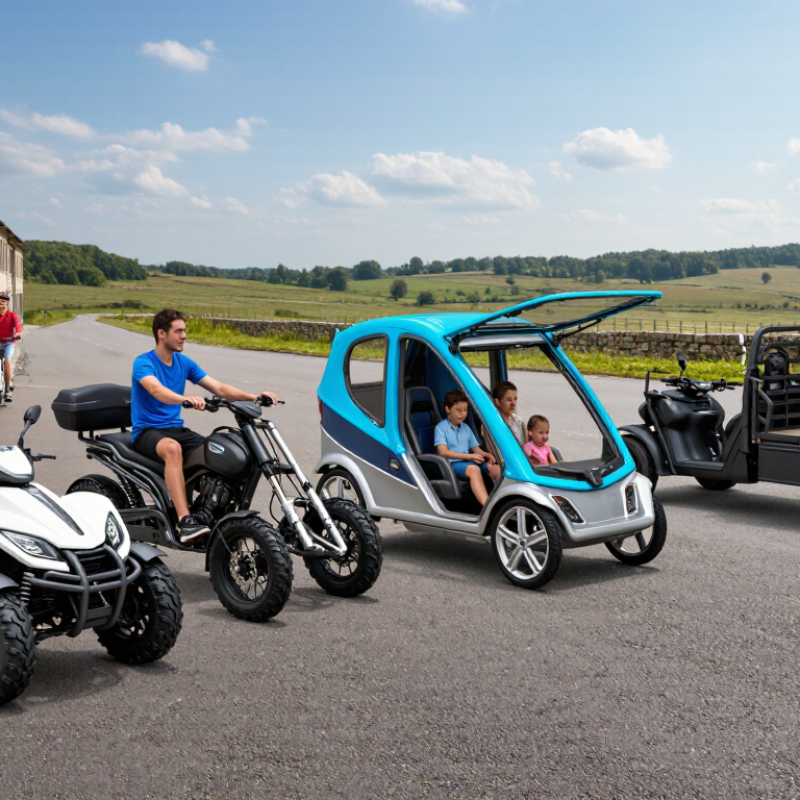
A quadricycle bike uses four wheels to support a stable, enclosed, or semi-open riding platform. Its basic design usually combines bicycle-style pedals with a reinforced frame, steering system, braking equipment, and optional electric assistance. The extra wheels improve balance at low speeds, especially when carrying groceries, tools, or children. However, stability is not automatic. Poor weight distribution can make cornering awkward.
A practical frame should resist twisting while keeping the vehicle light enough for daily handling. Wide doors or a low step make boarding easier. Adjustable seating helps different riders maintain a comfortable knee angle. Reliable disc or drum brakes are important because added cargo increases stopping distance. The steering should feel predictable, not overly sensitive. Small details matter.
Battery placement also affects handling. A low, central position usually improves balance and reduces body roll. Buyers should check charging access, weather protection, tire availability, lighting, and serviceable parts. In wet climates, sealed connectors and corrosion-resistant hardware deserve close attention. In hot regions, ventilation and battery temperature control may matter more. No single layout fits every city. A compact model may turn neatly but sacrifice cargo space, while a larger body can feel safer yet remain difficult in narrow lanes. Local road rules, speed limits, equipment requirements, and parking conditions should be verified before purchase.